Your basket is currently empty!
Category: Affiliate Marketing

Maximizing Cost Per Acquisition (CPA) — Here’s What Experts Have to Say

In the paid acquisition world, clicks on your ads can seem like the holy grail. But to accurately measure my content’s converting capabilities, I’ve found cost per acquisition (or CPA) to be a much more valuable metric.
In the paid acquisition world, clicks on your ads can seem like the holy grail. But to accurately measure my content’s converting capabilities, I’ve found cost per acquisition (or CPA) to be a much more valuable metric.
If you really think about it, clicks only tell you if people arrive at your content — not if they stay and, better yet, buy into your product or service. Monitoring cost per acquisition, on the other hand, has helped me determine whether my content is engaging enough to convert.
![→ Free Download: Free Marketing Reporting Templates [Access Now]](https://no-cache.hubspot.com/cta/default/53/0d883e85-c2e5-49bb-bef2-bfddb500d84b.png)
Here’s what I’ve learned about what exactly CPA is, how to calculate cost per acquisition, how the bidding process works, and some key principles for crafting creative and convincing ad copy.
Table of Contents
- What is cost per acquisition (CPA)?
- Why is cost per acquisition important?
- How to Calculate Cost Per Acquisition
- What is a good cost per acquisition?
- How Cost Per Acquisition Bidding Impacts Ad Rank
- How to Lower Cost Per Acquisition (CPA) Costs
Many marketers prefer the cost-per-acquisition pricing model because they can define an acquisition before they start advertising and only pay when their desired acquisition or action occurs.
For example, if you define acquisition as submitting one specific form, you’ll pay each time that form is submitted — but not when visitors click on your ad and simply view the form.
I like this model because it allows you to stretch your advertising budget just a bit farther. (Check out these free templates to help you manage your budget!)
This pricing model is used in a handful of paid marketing mediums, including:
- Pay-per-click (PPC)
- Display
- Social media
- Affiliate
- Email marketing
- Content marketing
Why is cost per acquisition important?
If you’re considering pay-per-click advertising, you need to understand CPA. It’s an important metric to help you plan your advertising strategy.
To help you better understand why, I thought it would be useful to share insights from marketing and advertising specialists.
Here’s what they said when I asked, “Why is cost per acquisition important?”
1. Plan your marketing budget.
Ross Kernez, founder of SEO Meetup and CEO of Stealth, told me that your CPA can help you better plan your multi-channel marketing strategy, including PPC, social media, and content marketing.
Kernez said, “Knowing your CPA enables better allocation of marketing budgets. It helps marketers identify which channels are more cost-effective in delivering results, allowing them to focus resources on high-performing campaigns while cutting back on underperforming ones.”
2. Improve your conversion rate.
Calculating your cost per acquisition can also help you identify strengths and weaknesses in your marketing strategies. Then, you can trim away efforts that aren’t pulling their weight and focus more of your time and resources on campaigns that bring the most conversions.
Cristina Muchi, founder and CEO of Upway Marketing, put it this way.
“CPA is the yardstick for measuring how efficiently the marketing dollars are working for the brand. Whether the company is using Facebook ads, Google search, or email marketing, every platform and campaign incurs a cost. CPA shows us which strategies are truly delivering conversions without burning through the budget.”
3. Easily scale your efforts.
Alfred Goldberg, president of Absolute Marketing Solutions, told me that calculating your CPA helps eliminate guesswork in marketing and makes it easier to scale your efforts.
Goldberg said, “You can confidently scale your campaigns when you know your CPA is profitable. If you’re spending $10 to get a customer who spends $50, why wouldn’t you increase your ad budget? CPA lets you grow without the guesswork.”
How to Calculate Cost Per Acquisition
To calculate your advertising campaign’s CPA, take your total advertising spend and divide it by the number of acquisitions generated.

Here’s what that looks like: Let’s say you have an advertising budget of $5,000. However, you only spend $2,500 and generate 1,200 conversions.
Your math will look something like this:
CPA= 2,500/1,200
This gives you a CPA of $2.08. In other words, each conversion costs around two dollars of your advertising budget.
(Alternatively, you can use the Return on Ad Spend (ROAS) calculator to quickly crunch these numbers and a few other important metrics!)
Keeping tabs on your cost per acquisition — and other key indicators of successful marketing — is an essential part of continuing to grow your marketing efforts. That’s why I recommend including CPA in your monthly marketing reports, to ensure you’re regularly checking in and evaluating whether your ad spending is being put to optimal use.
Pro tip: If you don’t already create monthly marketing reports, check out these templates to get you started.
What is a good cost per acquisition?
Now that you know why CPA matters and how to calculate yours, you might be wondering what a good cost per acquisition looks like. Or, in other words, what numbers should you aim for?
I’ll let you in on a secret: a “good” cost per acquisition varies by industry. So, a $5 CPA might be perfect for one but entirely too high for another.
Still, while there’s no hard-and-fast rule, there are some guidelines to keep in mind I like to keep in mind.
Keep It Low
Ideally, you want to keep your CPA as low as you can while still hitting your desired conversion rates.
I like how Randall Yates, CEO of The Lenders Network, explains it. Yates says, “If you can keep your CPA low, you’re in a position to thrive because every dollar spent brings in more value. It’s like a well-oiled machine — you’re reaching your ideal customers efficiently, and that’s how you scale a business.”
On the flip side, Yates adds that if your CPA is too high, “it means your marketing efforts aren’t hitting the mark, and you’re throwing money at a problem without getting the returns. I’ve seen businesses struggle and fail because they couldn’t get their CPA under control. So, for me, lowering CPA isn’t just important — it’s make or break.”
Maintain a 3 to 1 Ratio
To avoid spending too much on advertising, a good rule of thumb is to aim for a 3 to 1 ratio. This means that for every three dollars you spend, you make one conversion.
For example, if I’m spending more than $3 per conversion, I’ll want to evaluate my marketing strategies to see what’s not working and adjust accordingly.
If I’m spending way less than $3 per conversion, on the other hand, it may be time to increase my ad spend a little and scale my marketing efforts.
Ask Around
If you’re still not sure whether you’re hitting a healthy CPA — or if you’re just starting out and don’t have much data of your own to analyze — try reaching out to other marketers in your industry to compare notes.
This will help you get a better understanding of your CPA and if it’s too high or low for your industry. Plus, it’s a great way to expand your network and potentially even get some insider tips from people with more experience in your field.
How Cost Per Acquisition Bidding Impacts Ad Rank
Cost-per-acquisition bidding doesn’t work quite like a typical auction. Advertising platforms like Google want to level the playing field when it comes to leveraging the size of their reach. So, instead of the highest bidder always winning the auction, these platforms award the top ranking for each keyword to the bidder with the highest ad rank.

Here’s how it works.
- Google assigns each ad a quality score. Your quality score depends on your page’s relevance to the keyword, user experience, and click-through rate.
- Your quality score is multiplied by your maximum CPA bid. This calculation gives you your ad rank.
- Low-quality content must pay more to rank higher. To discourage bad advertisers from advertising bad content, those with low-quality scores will usually only acquire a high ad position if they pay a huge CPA bid. Otherwise, they’ll have to settle for the bottom of the ad rankings.
This means organizations can’t acquire the top ranking for any keyword they want just because they have the biggest ad budgets, which is a relief for smaller marketers like me. Their content has to be engaging, and because of that, you and I can fairly compete with them.
Target CPA Bidding
To generate as many conversions as possible within the limits of your advertising budget, consider using Google’s target CPA bidding.
Target CPA bidding leverages machine learning to:
- Analyze your campaign’s historical conversion data.
- Recommend an optimal average target CPA.
- Automatically optimize all your eligible bids to meet the average target CPA you set for all your campaigns.
If you use target CPA bidding, some of your conversions may cost more than others because your quality score or the competition in your ad auction might fluctuate. However, Google will try to keep your actual cost per acquisition as close to your average target CPA as possible.
Setting a lower target cost per acquisition is a good starting point for lowering your CPA costs and maximizing your ad spend. However, CPA isn’t the only metric that determines the effectiveness of your advertising.
In this section I’ll take a look at some other tweaks you can make to your marketing strategies to make the most of your efforts and resources.
1. Write compelling ad copy.
Since your ad’s quality score plays such a huge role in securing a top ad ranking, one of the best ways to optimize your CPA costs is to craft compelling ad copy.
When you sit down to write an ad or landing page copy, your goal should be to write something so captivating that it can grab the attention of a distracted consumer who has Netflix on in the background while they scroll through TikTok.
One way to do this is by selling a feeling, not a product — or, in other words, by selling benefits instead of features to drive emotion-based action.
For example, I wouldn’t just say, “This computer has twelve hours of battery life.” Instead, I’d make a more compelling argument: “With 12 hours of uninterrupted power, you can create, work, or explore the web all day, at your desk or on the go.”
2. Prioritize customer retention.
It may seem obvious, but it bears stating anyway: Acquiring new customers is often more costly than retaining existing ones.
What’s more, repeat customers tend to generate more revenue over their lifetime compared to one-time purchasers. So, by focusing on customer retention, you can increase the customer lifetime value (CLV) of your customer base.
Some of the best ways to increase customer retention include:
- Checking in with your customers.
- Providing targeted support.
- Building a solid relationship with your customers.
By focusing a majority of your marketing efforts on customer retention, you can leverage the investment you’ve already made in acquiring those existing customers, reducing the need for additional acquisition spending. This ultimately leads to a lower CPA.
3. Enhance your landing pages.
Just because you’ve crafted an attention-grabbing ad doesn’t mean your work is done. You still need to design a compelling landing page that clearly conveys the value of your offer.
Here are some ways I like to do that:
- Pique your audience’s curiosity with an intriguing headline and subheading.
- Scrap any external links from your landing page so visitors can only leave your paid acquisition funnel if they exit or convert.
- Try using videos to engage your audience and quickly explain the value of your offer.
Pro tip: For even more help optimizing your landing pages to drive revenue, check out HubSpot’s Marketing Hub.
4. Leverage your CRM to prioritize high-quality leads.
The power of a CRM lies in its ability to centralize and manage your leads. By organizing leads based on their stage in the sales cycle, you can prioritize your efforts on those with the highest potential to convert.
As a result, you can avoid wasteful spending on leads that are less likely to convert, leading to a lower CPA overall.
For best results, I recommend taking the time to analyze how your leads interact with your sales funnel and CRM. This can help you identify sticky points that might lead to customer loss.
Pro tip: Try out HubSpot’s free CRM to jumpstart this process.
5. Conduct market research regularly.
To acquire more customers and lower CPA costs, you need to understand your audience. After all, how can you speak to your audience if you don’t know who they are? That’s where market research comes in.
Market research helps you gain insights into the needs, preferences, demographics, psychographics, and behaviors of your target audience. This information enables you advertise on the right platforms and refine your targeting perimeters.
Plus, it helps you adjust your messaging to resonate with the right people. This, in turn, increases the relevance of your ads and content, resulting in higher engagement, click-through rates, and conversions.
If you aren’t sure where to start your market research, check out social media platforms and forums like Reddit. Reading posts from people in your target audience will help you learn about their wants, needs, and pain points.
Pro tip: You guessed it — HubSpot also has a free market research kit with templates and planning docs to help.
Chase conversions, not clicks.
Marketers will chase vanity metrics until the end of time. If you’re like me, you might feel pressured to do the same — especially when your peers clamor on about their astronomical growth in views or clicks.
But, as great as ad clicks are, a lead only counts if it converts to a sale. When you feel tempted to obsess over your click counts, remember that the goal in marketing is persuading visitors to take your desired action.
So incentivize your brand to craft ad content that resonates with your audience, because that’s what keeps people on your page and prompts them to act. And make conversions, not clicks, your carrot.
Editor’s note: This post was originally published in May 2019 and has been updated for comprehensiveness.


29 of My Favorite Visual Content Creation Tools

Visual content, be it video, infographics, photos, or some secret fourth thing, is a must-have in any marketing campaign. But, if you struggle to edit visuals or coordinate elements like colors and fonts, creating visual content for your brand can seem daunting.
Visual content, be it video, infographics, photos, or some secret fourth thing, is a must-have in any marketing campaign. But, if you struggle to edit visuals or coordinate elements like colors and fonts, creating visual content for your brand can seem daunting.
If that‘s the case, I’ve been in your shoes before. To help you create valuable visuals for your brand, here’s a list of nearly 30 online design tools you can use, many of which are free or have free trials.

But first, let’s quickly jump into how to create visual content.
Table of Contents
- How to Create Visual Content
- Visual Conent Examples
- Online Design Tools for Creating Stunning Visual Content for the Web
How to Create Visual Content
First things first, you need to know your audience. Before I create any graphic, I think about the type of content my target audience responds to and what platforms they frequent the most.
For example, during my time working at a television news station, I found that our viewers responded well to infographics and spent most of their time on Facebook.
So, naturally, I’d create infographics to break down complex news updates and distribute them on Facebook.
Once you figure out your format and distribution channel, you’re ready to start working on your visual content. I encourage you to be creative, think outside the box, and experiment with different approaches. That said, you should always use colors that pair well together.
Not sure how to coordinate colors? No worries! Whenever I’m struggling to find the right colors to incorporate into a graphic, I consult Canvas color wheel, which also includes a crash course in color theory and combinations.
I also suggest using your brand’s colors in your visual content wherever possible. It gives your content a cohesive and consistent look and helps you brand stay top of mind for consumers.
Use consistent, branded fonts if you‘re able to, and avoid using too many fonts. My rule of thumb is now more than two different fonts in one graphic. And don’t be afraid to experiment with tools like HubSpot’s Clip Creator or any of the ones I’ll list in this post.
Even if you don’t use every tool, its features and resources may inspire you for future projects.
Visual Content Examples
1. McDonald‘s “WcDonald’s Campaign”
McDonald’s ran an ad campaign called WcDonalds that featured ads animated in the Japanese anime style. The idea coincides with the recent popularity of anime in mainstream media and how the franchise if often referenced in anime and by fans alike.
I’m a huge anime nerd, so of course, I adored this campaign. As a marketer, I loved the bold use of color, the high-quality animation, and the fun storylines in each ad.
2. Airbnb’s Instagram
Airbnb relies heavily on visual content to attract customers to it‘s rental properties listed by Airbnb hosts. The vacation rental company’s Instagram mainly consists of gorgeous photos taken by Airbnb renters, influencers, and photographers.
The result is a gorgeous photo collage of picturesque rentals, happy families and pets enjoying the amenities, and genuine customer reviews.
-1-20250411-8001560.webp?width=335&height=509&name=visual-content-creation-tools-(new)-1-20250411-8001560.webp)
3. National Geographic
The folks at National Geogrpahic are pros at using visual content like infographics to rely complicated information in a way that is easily digestible. In the example below, NG uses an infographic to show readers how fires often protect California’s giant sequoia trees.
-2-20250411-3233388.webp?width=427&height=449&name=visual-content-creation-tools-(new)-2-20250411-3233388.webp)
Online Design Tools for Creating Stunning Visual Content for the Web
When I initially started creating graphics for previous jobs, I was completely lost. I didn‘t have much an eye for color or font combinations, I didn’t always know what images worked for the message I was trying to convey, and I didn’t always know where to find the content I needed.
And don‘t get me started on the perils of creating visual content on a limited budget. Fortunately, you don’t have to struggle like I did because here are 29 online design tools to make visual content creation much easier.
Font Tools
1. Fontjoy
Need to find the perfect font combination for your next project? Fontjoy makes it easy for users to find great combinations of fonts. It uses a neural net to provide font suggestions, displaying them in real time to help you get a better sense of how they look paired together.
-3-20250411-6983224.webp)
What I love: Fontjoy takes the guesswork out of pairing different types of fonts, something even I’ve struggled with.
2. Google Fonts
If you’re looking for quality typography for your next design, check out Google Fonts. This directory of web fonts makes it easy for users to add a font to their website in seconds or download it to their computer to use later.
-4-20250411-2275714.webp)
What I love: All of the available fonts are open source, meaning users can customize, improve, and share them as they see fit.
3. WhatFont
Have you ever come across a font on a particular web page and thought, “I need that?” With WhatFont, users can quickly and easily identify the names of the fonts used on any web page with just one click.
Available for download as a bookmarklet, Google Chrome Extension, or Safari Extension, you’ll never be left feeling stumped about a font name again.
-5-20250411-4447607.webp)
What I love: WhatFont is incredibly easy to use and fun to experiment with when you’re looking for font inspiration.
4. DaFont, 5. 1001 Free Fonts, and 6. Font Squirrel
Looking for an extra special font to help your design stand out? While there are a ton of free font resources out there, we’ve narrowed down our favorites to DaFont, 1001 Free Fonts, and Font Squirrel.
What I love: These sites offer an extensive library of high-quality fonts that are easy to download and clearly defined in terms of licensing.
Templates
7. HubSpot’s 15 Infographic Templates
Sometimes, you‘re just short on time and need to make a graphic or graphics as quickly as possible. In those moments, you don’t need tools; you need a template.
With this pack of free infographic templates, you can create professional-looking infographics and save hours of time in the process. The best part? You can easily customize them to fit your company’s branding.
-6-20250411-4231377.webp?width=465&height=361&name=visual-content-creation-tools-(new)-6-20250411-4231377.webp)
What I love: These templates can serve as time savers or inspo. The choice is yours!
8. Canva
Canva and I go together like peanut butter and jelly. I’ve been using the tool for both personal and professional projects for about 10 years now.
Whether I’m looking to create an ebook, infographic, business card, or email header, Canva has a template to simplify my process. In fact, the free web design tool offers professional, easy-to-customize templates for just about any design need you can think of.
-7-20250411-2309911.webp?width=644&height=218&name=visual-content-creation-tools-(new)-7-20250411-2309911.webp)
What I love: Canva is built with non-designers in mind, making it easy to drag-and-drop objects and images until you like the way it looks. Change the images, switch up the fonts, adjust the colors, and voilà: You’ve got yourself a design you can be proud of.
9. HubSpot’s 28 Customizable CTA Templates
If you want to drive your website visitors to take an intended action, you need to make it easy for them to do so. That’s where CTAs come in.
But not just any old design will do. In fact, factors like color, size, and shape, all play a role in the performance of your button. So to help you encourage more visitors to become leads, we’ve created 28 pre-designed CTA templates to employ on your website.
-8-20250411-8710170.webp)
What I love: These templates are customizable, so I encourage you to test different colors and placements until you find what works best for you.
10. HubSpot’s 30 PowerPoint SlideShare Templates
Love the concept of SlideShare but don’t have a lot of experience designing in PowerPoint? No problem.
With our free PowerPoint templates, you can create beautiful SlideShare presentations without the heavy lifting. Simple plug in your content, adjust the colors to match your branding and swap out images as you see fit.
-9-20250411-1488652.webp)
What I love: These templates range from clean and simple to a bit more intricate, so you’ll have no problem finding one that suits your content.
Color Tools
11. Coolors
I’m a firm believer that one of the most important elements of web design is the color palette. You want to make sure your images, graphics, and font colors convey your message and maybe even drive conversions.
But often, it’s hard to find the right color combination for a design, which is where Coolors comes in. Press the spacebar to instantly get recommendations for colors to use, including their respective HEX codes. Your color palettes will never be uncoordinated again.
-10-20250411-4319826.webp)
What I love: Coolors is very user-friendly and can help content marketers save a lot time finding the right colors for their visual media.
12. ColorZilla
ColorZilla is a great tool for all your color-related needs, from the most basic to the most advanced. Whether you’re looking to pull up the HEX code for a specific pixel on a page, analyze DOM element colors, or uncover element information such as tag name, class, id, and size, this tool can handle it all.
-11-20250411-9919572.webp)
What I love: ColorZilla is versatile, so play around if you want to find other use cases for your graphics.
13. Canva Color Wheel
I love, love, love Canva‘s online color wheel! As I said earlier, it’s a simple way to pair different colors for your visual content, especially if you‘re like me and don’t know much about color theory.
What I love: The tool is so fun to play around with, and I love that it gives you a quick run-through of color theory so you can learn to apply it to other projects.
Annotation Tools
14. Awesome Screenshot
Ever find yourself drowning in 20 different programs to crop, edit, and annotate screenshots? With Awesome Screenshot, a browser extension for Firefox and Chrome, you can easily screenshot anything on the web and edit it directly within your browser.
-12-20250411-4353925.webp)
What I love: Awesome Screenshot is easy to use and a huge timesaver.
15. Filestage
How often have you shared feedback about a PDF or image, only for it to be misinterpreted? Filestage is a feedback tool that makes it simple to leave in-context feedback on just about any file type you can think of. Documents, PDFs, videos, graphics, and more.
What I love: With a wide range of annotation and proofing features, you can draw on top of your content to bring comments to life. This makes it easy to align internal and external stakeholders in real time. And best of all, your first two projects are free.
Photo Editing Tools
16. PicMonkey
Okay, let‘s say you don’t have the budget for Photoshop and feel somewhat limited by PowerPoint’s visual editing capabilities… what are you to do? If you want to spruce up your images — re-color them, add borders, add text, and even insert graphics on top — all without downloading yet another program to your computer, check out PicMonkey.
-13-20250411-7948386.webp)
What I love: The whole photo editing process is intuitive, which means you can spend more time optimizing your blog posts instead of sprucing up its accompanying featured image.
17. BeFunky
If you love the look of cool, vintage Instagram-esque photo filters, you’ll love BeFunky. This free photo editor boasts a ton of awesome features, including effects, frames, graphics, and textures.
-14-20250411-7743505.webp)
What I love: Whether you’re a seasoned designer or just getting started, the interface is super straightforward and approachable. With just a few clicks, you can enhance an ordinary photo or create a collage worthy of sharing on your social accounts.
18. Giphy
Giphy is a tool for converting portions of video into looping GIFs. You can also use other user-generated GIFs on the platform. This adds personality to presentations, emails, and blog posts.
-15-20250411-5218117.webp)
What I love: Giphy is essentially Google, but for GIFs. Just type in the show, movie, emotion, or vibe you’re looking for and see what fun GIFs pop up.
19. Adobe Express
Adobe Express is an online design tool for creating and sharing graphics, web pages, and videos. It offers access to thousands of images and icons, as well as branded templates, themes, fonts, and other design assets.
-16-20250411-2237649.webp)
What I love: Adobe Express is great for people who are creating images on a budget and don‘t have the editing knowledge you’d typically need for applications like Photoshop.
20. VSCO
Just imagine: You‘re at an event. You’re laptop-less. And you just took an awesome photo with [insert esteemed thought leader here] that you want to share on social media… but it’s a little dark. Bummer.
With a mobile photo editing app like VSCO, you can tweak your photo to perfection and share it on the fly. The app is free for iOS and Android and comes equipped with impressive, professional-looking filters and functions.
What I love: You edit videos from pretty much anywhere with VSCO, making it efficient and convenient.
Stock Photo Resources
21. Vecteezy
If you’re looking for a Creative Commons image but are finding terrible options through its native search engine, check out Vecteezy. While it often surfaces similar content, Vecteezy has an algorithm that places the gorgeous images right at the top — cutting my image-hunting time down by a ton.
What I love: Vecteezy is easy to navigate and a huge time saver.
22. Death to Stock
All it takes is an email address to start receiving Death to Stock‘s high-quality photography straight to your inbox every week. From office shots to drool-inducing food plates, this stock photo service has a batch of photos to meet almost anyone’s needs.
These images can be used on your website, social channels, mockups, etc. To get familiar with their terms of service, check out their licensing page.
What I love: Death to Stock constantly updates its collection of media, so there are always new elements to choose from.
23. Stock Photos From HubSpot
If you‘re looking for stock photos to use in your next design but don’t want to worry about all that attribution stuff, well, look no further. HubSpot offers a ton of free stock photos that you can use literally anywhere.
-17-20250411-1215319.webp)
What I love: All you need to do is download the batch and then be on your merry way to create engaging, visual content. Seriously… just do it.
24. Unsplash
If you’re looking for more “do whatever you want” photos with a scenery or inanimate object tilt, check out Unsplash.The pictures speak for themselves — so go check out the website for more.
-18-20250411-7751227.webp)
What I love: Just like our own stock photos, no attribution is needed.
Design Tools for Infographics, Charts, and Mockups
25. Infogram
If you’re looking to make interactive infographics — not just plain visuals — check out this online design tool. Easily add graphs, maps, text, and even playable videos without diving deep into a design program.
What I love: It also has social sharing tools built right into the infographic, so you don‘t have to worry about creating a custom Pin-It button. It’s a pretty nifty tool if you want to create and ship an infographic — fast.
26. Venngage
Venngage is a free infographic maker that has the capability to produce charts, reports, and stunning data visualizations. You can start with a template and easily customize the look to fit your brand.
Under the free plan, you’ll be limited to the number of image uploads and designs you can do, but there are more advanced plans with premium feature sets.
-19-20250411-407588.webp)
What I love: With highly customizable templates and AI-powered features, what’s not to love?
27. Visme
With Visme, you get a whole platform for creating digital content with capabilities for presentations, data visualization, infographics, social posts, and even short videos.
What I love: You can have up to 5 projects and 100 MB of storage in the free version, plus access to a library of free templates for projects such as ebooks, flyers, and logos.
-20-20250411-5927113.webp)
28 Miro, 29. Marvel
Depending on the sophistication of your design needs, you may find yourself in need of a prototyping app. This type of software can be used to turn your ideas — whether it be an app or a website that you’ve cooked up in your head — into a more tangible reality.
While many free options are available, we’ve selected two that really deliver in terms of ease of use and functionality: Miro and Marvel. Although both of these options offer more advanced, paid plans, you can get started with a free plan.
Time to Content Create
This list shows just a few possibilities for tools and templates that can help you create high-quality, engaging visual content for your brand. Now, you can go try some out for yourself.
Editor’s Note: This post was originally published in September 2013 and has been updated to be fresh, accurate, and comprehensive.

Social Media’s Role in Reshaping Online Shopping, According to Retailers
Social buying. Everyone and their mama is doing it — or maybe it‘s just me and my family. I’m consistently tagged in posts (thank you, cousin) about adorable gifts, must-have outfits, and the like.
Social buying. Everyone and their mama is doing it — or maybe it‘s just me and my family. I’m consistently tagged in posts (thank you, cousin) about adorable gifts, must-have outfits, and the like.
Now, I’m a content marketer who knows when I’m being sold to, but even I get lured by social posts with irresistible products. And I know I’m not alone — as of 2024, over 110 million Americans (roughly 42% of internet users) are fellow social buyers.
So, if you’re a brand selling products to consumers and you’re not already using social selling, 2024 is a superb year to start.
Not convinced?
Let’s explore the social commerce landscape, best practices, and fun examples of brands already seeing success. Plus, I’ll share insights from experts I talked to about the future (and present-day) of social commerce.
Social Media and Online Shopping — Today’s Landscape
7 Social Media Online Shopping Trends
Tips for Making the Most of Your Social Media
![Download Now: Free State of Marketing Report [Updated for 2024]](https://no-cache.hubspot.com/cta/default/53/db725f24-564c-483b-a28c-2d6ff9986516.png)
Social Media and Online Shopping — Today’s Landscape
Salespeople. Marketers. Brands. They’re all jumping aboard the social selling bandwagon for good reason. Global social commerce sales could reach an astounding $2.9 trillion by 2026.
I know it’s a staggering number, but forecasts aren’t always enough to convince the gatekeepers of our selling and marketing budgets, are they?
So, let’s look at some facts and numbers straight from the horse’s mouth (buyers and brands):
- Salespeople reveal, “Our highest quality leads come from social media, so we’ll prioritize this channel.”
- Consumers say, “36% of us use social media to find new products, plus 28% of us Gen Z and Millennials purchased directly from social media apps within the past three months.”
- 80% of social media marketers agree that “consumers are buying our products directly from social apps more than they purchase from our brand websites or third-party resellers.”
- 87% percent of brands confirmed that “social selling has been effective for their business.”
- Instagram says that “71% of Gen Z are likely to buy directly from [Instagram] compared to 68% for YouTube and TikTok.”
And if that’s not enough to convince you, check out this chart illustrating how well sales improved year over year for brands using social selling.
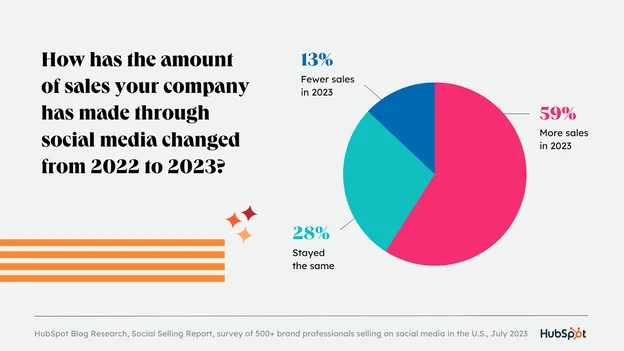
In a nutshell, social media commerce is on the rise, widely accepted by young consumers, and drives sales for brands.
7 Social Media Online Shopping Trends
What’s the secret behind the success and rapid growth of social media selling? Well, there isn’t one. Like any other marketing channel, you must monitor competitors and test different strategies.
But to give you a leg up, I gathered the top trends I’m seeing based on responses from experts and my own research.
1. Seamless In-App Shopping Experiences
As I noted above, consumers are buying from brands directly on social media platforms, so it makes sense to build a seamless in-app shopping experience for your customers.
No one wants to jump through hoops to make a purchase they thought would take only a few seconds.
But since you don’t have control over the development of these apps, or how well they’ll work for your customers, be sure to choose platforms already two steps ahead.
For example, I see social networks like Facebook, Instagram, and TikTok enhancing in-app shopping. Facebook has a marketplace and shops you can use to build your digital storefront.
(In our recent study, we found this feature to be highly important to 36% of marketers.)
Instagram also has shopping features that could be used by over 46 million American social buyers in 2024. Both Facebook and Instagram allow users to checkout directly on the platform.
TikTok Shop is also available, but has been slow to gain traction in the U.S. In the summer of 2023, it generated $3 million to $4 million daily.
If you decide to use the platform, know that users can shop from multiple brands at once and add products to a single shopping cart.
But don’t rely on platforms to deliver seamless social media shopping experiences. I recommend taking it further by creating shoppable social posts. You can also use Likeshop.me to tie your shop to your social posts.
World Market wins with shoppable Instagram posts.
Like all the decor you see in a photo-rific post on Instagram? You can buy everything in one sitting. Below is an example of a highly shoppable post from World Market created using Likeshop.me.
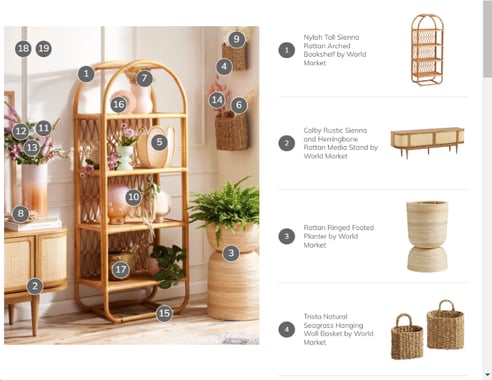
This shopping feature turns your Instagram posts and TikToks into mini-shops where you can tag and add products for shoppers to explore (and more importantly, purchase).
Gift Delivery also saw great success using shoppable videos.
“By integrating direct purchase links into our video content, we’ve made it seamless for customers to buy products as soon as they see them featured,” shares Billy Parker, Gift Delivery’s managing director.
Parker continues that preliminary campaigns with this feature yielded “a 20% uptick in sales attributed to shoppable video content alone.”
Parker also notes that “the success of these campaigns lies in their ability to not only showcase products in action but also in the convenience they offer, significantly shortening the customer journey from discovery to purchase.”
Are you wondering which platforms you should focus on?
The top social networks offering the highest ROI (according to 1,000+ social media marketers) include:
- Instagram (33%).
- Facebook (25%).
- YouTube (18%).
- TikTok (12%).
- X/Twitter (6%).
2. Short-Form Product Videos to Drive Engagement and Sales
Product demos, teasers, and similar videos are a money-maker on social media for 66% of video marketers. The beauty of this trend is that it’s short and sweet, and allows you to toot your own horn.
According to 36% of video marketers, three minutes or less is all you need. Done right, 40% of video marketers state that videos help customers understand your product better.
But how do you create engaging videos that feature your product without it coming off as an ad?
One option is to get an influencer involved. Tying social proof into the video makes it less sales-y — even more so if you partner with a small, trusted content creator (more on that later).
Examples of short video content you can create include:
- Behind the scenes (BTS). Show you’re human and relatable.
- Product teasers. Showcase a new feature or product.
- How-tos. Share a quick tip to improve a process using your product.
- User-generated content (UGC). Demonstrate how others are using your product.
- Highlight reels & montage. Show the multiple benefits of your product in action.
- Customer reviews. Leverage customer success stories as social proof.
- FAQs. Answer questions about your product.
- Influencer collabs. Partner with an influencer to feature your product in their content naturally.
You get the idea. So what does short video content look like in the real world? Let’s take a look.
Irresistible Me lets its hair down on TikTok.
Irresistible Me is a beauty company specializing in hair extensions and wigs.
“TikTok is where we let our hair down — literally! It’s all about fun, quick, engaging content,” says Irresistible Me’s Marketer Kate Ross. “We jump on trends, create challenges, and use TikTok shopping features to link back to our products. It’s like the energetic party everyone wants to be at.”
Here’s an example of a TikTok using user-generated content, or should I say influencer-generated content, with Audrey Boos.
The video did well, with over 2K likes, 700+ bookmarks, and nearly 100 comments.
“TikTok has been huge for us. We’ve been getting creative, jumping into challenges, and teaming up with influencers who just get what we’re all about,” continues Ross. “It’s all about fun videos that show off what you can do with our products. This approach has brought a bunch of new faces to our site and helped us stand out in a pretty crowded market.”
3. More Team-Ups With Nano- and Micro-Influencers to Build Trust
I’m seeing fewer big influencers and more micro-influencers in my feeds lately. And I kinda like it. Okay, I really like it. Like most, I enjoy seeing real and relatable content creators.
It appears more brands are taking this approach, too, which is better for their bottom line — it reduces the marketing spend and potentially boosts their revenue.
Roughly 67% of influencer marketers work with micro-influencers and 24% team up with nano-influencers. The top social platforms they plan to do most of their partnerships on are:
- Instagram (27%).
- Facebook (19%).
- YouTube (18%).
- TikTok (15%).
So far, 47% of marketers report successful micro-influencer partnerships. This is not surprising when 21% of social media users between 18 and 54 buy products based on influencer recommendations.
So how can brands put this to use?
Glossier uses UGC to show how everyday women use its products.
Glossier, a renowned makeup company, regularly partners with nano- and micro-influencers. The following IG reel shows Sky Mejias applying its lip products. It’s a mix of a tutorial and social proof to get followers to give the items a try.
The video generated 320K views and nearly 7K likes, so we know it got good reach. This influencer is considered a nano-influencer since she has just over 3,500 followers.
It’s also promising that 1 in 3 Gen Zers bought from an influencer-founded brand in the past year. This proves how much our younger generation of buyers trusts influencers.
“Micro-influencers have been our secret weapon. We’ve seen incredible engagement from collaborations that feel genuine and personal,” shares Ross. “One campaign that stands out involved partnering with a micro-influencer who shared her journey from short to long hair using our extensions. Her story resonated with many, leading to a spike in visits and sales.”
Ross shares that they also leveraged AI: “What’s cool is how we can test using AI to match our products with the right influencers, ensuring their audience aligns with our target customers.”
4. Social Media Becomes a Top Search Channel
Gen Z and millennials continue to break the mold, this time with how they find brands and products. The old way: Google, Bing, and Yahoo. The new way? TikTok and Instagram.
Our State of Social Media Marketing 2024 report shows that 36% of Gen Z and 22% of millennials search social media more than they do search engines.
To conform to this new trend, brands must treat social media posts like they would SEO content.
“I can confidently say hashtags and reels are among our top performing Instagram strategies,” shares Michael Nemeroff, co-founder of Rush Order Tees. “We use targeted keywords as hashtags for our posts. However, we specifically prioritize keywords that still have less than 100k uses as hashtags to increase our chances of reaching more narrow, niche audiences.”
The Ordinary and its partner influencers use keyword-focused hashtags.
The best way to demonstrate the keyword-focused trend is to do it. So, I typed #acneskincare into Instagram and found the following reel by Joy Mercy Michael.
What makes this post work? It’s 100% user-generated content. It’s unsponsored and naturally refers her viewers to The Ordinary’s product (among a few others in the description, making it feel more authentic).
And since she tagged the brand in the post, it’ll reach its audience too. It also helps that she has over 100K followers.
Pro tip: Since it’s not just your own posts customers will find featuring your products, I recommend selecting a hashtag directly related to your product.
By promoting this hashtag in every post, you increase the likelihood that customers will use it too, which in turn increases the odds of prospects finding your products.
The more of your posts users see in the results, the higher the odds they’ll click on one.
5. Live Streaming Continues to Grow
Publishing images, reels, and carousels on social media keeps your audience engaged. But there’s nothing like the experience of interacting with a brand and other shoppers in real time.
Live streaming allows retailers to connect with customers and potential buyers on a more personal level, which humanizes your brand and offers the attention they need during the customer journey.
I believe brands should do more Q&A-style lives to invite viewers to interact and get answers that may keep them from hitting the buy button. The stream could feature an employee or an influencer.
Hallmark Timmins, a Canadian gift shop, partners with the latter.
“My brand has tested live-stream shopping events and found sales conversions to be three to four times higher than traditional social media posts,” explains Shawn Stack, Founder of Hallmark Timmins.
Stack continues that, “Viewers seem to find the real-time, interactive nature of live streams highly engaging, and the option to buy with one click reduces purchase friction.
We’ve also built personal connections between our influencers and their viewers, who regularly tune in to not just shop but also chat and get style advice.”
Your stream doesn’t have to be all sales. It can be a product demonstration or a Q&A session. If you have a product line, hire models or influencers to use the items so your audience can see how it works/looks before buying.
But don’t turn your stream into an infomercial. Instead, use “quiet selling,” where models wear shoppable items viewers can purchase during the stream. There’s no overt selling — just valuable discussions.
In a recent HubSpot study, we found that 27% of marketers want to use platforms that offer live-streaming features.
Are you wondering if live streaming actually works? According to CivicScience data, 25% of Gen Zers and 14% of millennials have purchased from live shopping streams.
Additionally, by 2026 live shopping sales will make up 5% of ecommerce in the U.S.
Aldo uses live shopping mixed with influencers to drive engagement.
Canada is already seeing success with live streaming. For instance, Aldo launched a successful live shopping pilot, partnering with influencers Mimi Cuttrell and Nate Wyatt to showcase its spring 2021 collection.
The interactive livestream allowed viewers to explore products from home, achieving a 308% engagement rate and driving 17,000 page views to Aldo’s website in the following five days.
I expect to see this trend become mainstream in America soon, especially with social commerce on the rise.
6. Augmented Reality is Enhancing Shopping Experiences
The pandemic normalized shopping for and purchasing everything entirely online — even houses and cars.
Brands that took notice are adopting augmented reality (AR) to attract shoppers who enjoy the convenience of online shopping, but still want the in-store shopping experience.
This AR shopping experience works by overlaying a digital product image on a real-world image of a store or the customer’s home (or face). Like that lamp? Use your smartphone or tablet to see how it’d look on your bedroom nightstand.
Peeping that pair of glasses? Mirror yourself in selfie mode wearing the shades to see if they’re your style.
It’s the same for hair products. “We’re currently working on implementing Augmented Reality (AR) on our website,” shares Ross, “so that customers can see how they’d look in different hair extensions or wigs without leaving their couch.”
It’s a smart move — it gives shoppers what they want, increases sales, and reduces returns.
I predict brands will drive traffic to their website using AR experiences on social media. However, many will create these tools within their apps and websites to keep consumers shopping in their online stores.
American Eagle partnered with Snapchat for “Dress Yourself” AR and VR experience.
In 2021, fashion brand AE used Snapchat to launch its Dress Yourself AR campaign — a unique experience where customers could use their self-facing camera to try on and shop various looks within its back-to-school collection.
They could even share the looks with their friends.
AE also partnered with Bitmoji to create a first-of-its-kind virtual reality clothing line that customers could purchase on Snapchat and wear on their avatars.
This wasn’t its first dabble in the metaverse — AE also launched a virtual store on Snapchat during the holiday season of 2020. After raking in $2 million, it chose to go all in, hiring an in-house metaverse team.
Now, it’s a matter of when other retail brands will follow suit.
Tips for Making the Most of Your Social Media
Ready to dive head first into some of these social commerce trends? Before you do, be sure to read the following best practices I gathered from retailers and marketing experts.
Use interactive content to engage and collect first-party data.
Posting on social media can help with brand recognition. But if you’re trying to sell on social media platforms, engagement is the name of the game.
You can use a mix of videos to drive views and interest, but there’s another way I found to be quite effective: quizzes.
These are not just your typical “take this quiz to see what type of dog you are” kind of content. I’m talking about quizzes that tie directly into a purchase.
I believe this is a game changer — it got me to purchase a face wash cream from IL MAKIAGE (and they got me with an upsell for its cream before checking out, too).
According to PopSmash, a Shopify quiz app tool, quizzes have helped:
- A haircare brand increase Shopify store conversions by 41%.
- A cosmetic brand increase ad revenue by 200%.
- A home goods brand increase their average order value by 60%.
“Instead of trying to sell directly on social media, we’ve found success in targeting engagement that sells for us,” explains Gabe Mays, founder of PopSmash. “For example, when posting about products, we have merchants share a link to a product recommendation quiz where users can find the best variant of that product for them.”
According to Mays, this works better because people are on social to be entertained, not buy. The quiz engages them while helping them discover the best products for them and can drive conversions.
The opt-in rate: Out of those who comment on a social post, around 30% will take the quiz and opt-in.
Craft engaging, authentic live sessions.
Live streaming is a growing trend, but it won’t work well if your streams are … well, boring. It’s tempting to jump in and showcase your products, but remember — consumers want to be entertained, not sold to.
As I stated earlier, you shouldn’t create infomercials. Use themes, trends, and edutainment content to attract viewers and then quiet sell to them with shoppable items in the video.
I’d also recommend teaming up with influencers across platforms like Twitch, YouTube, and Kick (the new kid on the block).
Then, when a sales event comes around — such as during the holidays or a new product launch — you can partner with influencers to showcase the goods.
“For Mother’s Day, we did something special,” shares Ross. “We teamed up with moms who are also influencers to chat about something many moms go through but don’t always talk about: hair loss after having a baby. These amazing moms shared their own stories … which helped a lot of our followers feel understood and less alone.”
These influencers didn’t just talk about the problem, though. Through their videos, they also showed how Irresistible Me’s hair extensions could help.
“What made this campaign a hit was how real and open it was,” continues Ross. “Plus, offering a special deal for Mother‘s Day was the cherry on top. It was all about connecting, sharing real stories, and showing that there’s a simple way to feel great about your hair again.”
Use giveaways to increase reach for quizzes and improve personalization.
“The new key approach we‘ve found (especially for DTC brands) is not to just think of ’social selling’ as selling since often users are on social to be entertained, not to shop,” says Mays. He says that you have to first engage them, and then take an “oh by the way, maybe you’ll like this” approach.
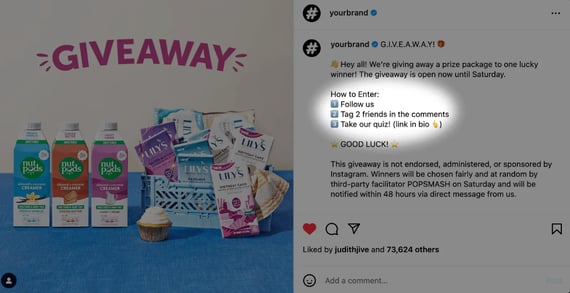
According to Mays, giveaways like this activate your social audience, who drive organic engagement and funnel it to the quiz. The quiz captures contact details (e.g., name, email) and product preferences to get them into a higher-converting channel like email or SMS.
Mays advises, “The key thing here is that ‘social selling’ isn’t just about trying to drive sales in the moment, but giving yourself leverage (personalization and contact data) to consistently drive longer-term sales.”
Don’t just generate customers — grow a community.
At least 20% of people have joined and participated in an online community. Some of them belong to communities created by their favorite brands.
It’s a fun way to connect with customers, get feedback, and share products and information they care about.
It’s about building relationships and loyalty — and hopefully, brand advocates — to increase your brand awareness and sales.
Our research shows that in 2024, 86% of social media marketers will prioritize building an active online community.
“One major trend is community-driven curation and influencer marketing. Our ‘DoDo Crews’ program taps into passionate communities, giving them tools to share looks and inspirations directly with their followers,” shares Mark Sheng, project engineer at DoDo Machine.
Sheng shares that, “Early results show a 25% bump in conversion when shoppers discover products through these trusted sources.”
Sheng’s advice is to put the community at the center. Facilitate authentic connections among brands, creators, and shoppers. Use trusted voices and native video. Social shopping should feel like genuine sharing between friends.
Community & Connection = Clicks & Conversions
Social selling isn‘t about shoving products down people’s throats. It‘s about fostering genuine connections and cultivating communities of passionate fans.
The brands winning are those making their customers feel like they’re sharing between friends (or at least, trusted advisors).
User-generated content, influencer partnerships, community curation — these are what will continue to drive social sales. When trusted voices do the selling for you, it turns a promotion into a friendly recommendation.
Tie in immersive tech like AR try-ons and shoppable videos to meet customers exactly where they are: scrolling on social, ready to be entertained and inspired to spend.
Brands putting community first will unlock clicks, purchases, and meaningful loyalty. They’re the ones who understand the future of social commerce is all about human-to-human connection, not brand-to-consumer broadcasting.



The Best AI Tools on the Market for Productivity and Audience Growth, as Tested by HubSpot’s SVP of Marketing

2024 was the year of AI tools. Thousands of new apps launched — some just photo generators and gimmicks, others much more useful. What stood out to me were the tools that actually helped you get things done.
2024 was the year of AI tools. Thousands of new apps launched — some just photo generators and gimmicks, others much more useful. What stood out to me were the tools that actually helped you get things done.
This list comes from a16z’s AI Unwrapped, which largely features consumer apps for personal use. I’m calling out a few favorites from categories like productivity, audience growth, learning, and even building your own tools. You can try these tools tomorrow to start being more productive.

Whether you need a research dump on space agriculture, want to clone yourself into a short-form video creator, or just stop typing everything out by hand, there’s something here worth trying. Let’s get into it.
AI Tools for Productivity and Audience Growth — My Top Picks
1. Flow Voice: Hands-Free Productivity with AI
If you’ve ever wished you could talk to your laptop instead of typing, Flow might be the AI tool you’ve been waiting for.

Similar to Grammarly, Flow embeds itself into every application that you use. But instead of fixing your grammar, Flow lets you control all your apps by speaking out loud. You can write emails, respond to Slack messages, edit Google Docs, and more — all without touching a keyboard.
Why Flow Is Interesting
We all type way too much. Between emails, Slack, docs, and text messages, it adds up. Flow is trying to cut out the extra effort by making it possible to talk to your computer the way you’d talk to an assistant.
Flow is built to be integrated into your workflow, meaning you can:
- Speak out a full Slack response instead of typing.
- Edit a document just by saying what changes you want.
- Translate text on the fly.
- Control your entire workflow with voice commands.
How Flow Works
I tested Flow, and here’s how it works:
- Hold down the space bar, speak your command, and Flow transcribes it in real time.
- Live editing is possible — just tell it to delete, rewrite, or change wording.
- You can even reply to Slack and email hands-free. AI makes sure your messages don’t sound like a robotic mess.
Here’s a screenshot of Flow in action:

My take: Editing by voice is weird at first but kind of amazing once you get used to it. If you’re someone who lives in Slack and email, Flow is worth trying
2. Cubby: AI That Organizes Your Research for You
Cubby is a research assistant for people who hoard information. If you’re the kind of person who has 50 tabs open at all times, you should try Cubby. This tool makes remembering where you saw that one quote, article, or podcast clip simple.

Instead of dumping links into a Notion doc or bookmarking things you’ll never revisit, you can just drop everything into Cubby. That includes PDFs, podcasts, MP3s, MP4s, YouTube videos, social media threads, articles, and files from your computer. Then, Cubby can transcribe and organize the information into something useful.
Why Cubby Is Useful
AI tools promise to make life easier, but Cubby solves a real problem: Research is a mess.
If you’ve ever tried to do a deep dive on a topic, you know how it goes. You start by reading one article, which links to a whitepaper, which references a podcast, which makes you think of a YouTube video someone recommended, which leads to another article. Now, you have a dozen sources but no structure.
Cubby acts as a central brain for all your research, pulling everything together and making it searchable and usable. Instead of keeping track of tabs and notes, you just dump everything in and let AI handle the rest.
How Cubby Works
- Drag and drop anything you’re researching into Cubby.
- Cubby transcribes everything and pulls out the key points.
- You can ask it questions about the content instead of manually digging through hours of material.

My take: Cubby acts as a personal research assistant, helping you find connections between different sources without manual effort.
3. Delphi: AI Clones for Content Creation
Delphi lets you create an AI clone of yourself that people can interact with. Instead of constantly answering the same questions or trying to be in a hundred places at once, you can train an AI model on your knowledge. Your audience can then “talk” to you even when you’re not there.

Why Delphi Is Useful
Let’s say you’re a content creator, consultant, or educator. You probably get a lot of the same questions over and over again — how to start a newsletter, how to grow an audience, how to price services.
Normally, you’d have to either:
- Answer every question manually (exhausting).
- Create FAQ pages or pre-recorded videos (helpful but static).
With Delphi, your AI clone can answer those questions for you in a way that feels interactive and personal. AI pulls from everything you’ve ever said, written, or recorded and responds in a way that sounds like you.
If you’ve built an audience and people value your expertise, Delphi lets you scale that engagement without being on call 24/7.
How Delphi Works
You train Delphi on your existing content — articles you’ve written, your podcasts, your videos, and any relevant recordings. Once your AI clone is up and running, people can go to your page and have a conversation with it.
Delphi’s chatbot is built to sound like you and to give answers based on your perspective — not just generic, AI-generated advice.
I tested this out with the AI clone of Brian Halligan, co-founder and executive chairperson at HubSpot. I wanted to ask questions about growing to $30M ARR and got some pretty helpful responses, along with referral links where I could learn more from Brian.
Delphi is a great idea for someone who has a wealth of expertise and with little time for one-on-one convos.
That said, this tool does raise a bigger question: Do people actually want to talk to an AI version of you? If someone is looking for a step-by-step process, they might be fine talking to AI. But if they want real feedback, ideas, or emotional connection, they’re probably still going to want you, not your clone.
My take: Right now, Delphi is best for creators who already have deep knowledge in a specific space and a community of people who are eager to access it.
4. HeyGen: AI-Powered Video Avatars
AI-generated video content has come a long way.
A few years ago, most AI avatars looked stiff and robotic, the kind of thing you’d see in a bad deepfake. But, HeyGen is pushing the boundaries. People might actually mistake an AI-generated version of you for the real thing.

HeyGen lets you clone yourself into a high-quality AI avatar. Your digital self can then give presentations or even just talk to your audience, without you stepping in front of the camera.
To experiment with the tool, I cloned myself and delivered an entire course through my AI clone.
Why HeyGen Is Interesting
HeyGen isn’t like those weird robotic avatars from a few years ago. The tool now has smoother facial movements and better hand gestures, which means the uncanny valley effect is shrinking.
In fact, some people didn’t realize AI was presenting my course. They emailed me afterward, saying I seemed “a bit off” because I was keeping my hands still — something the early HeyGen model required. However, even that level of confusion shows how far the tech has come.
If your content is purely educational or instructional, HeyGen is a great way to create at scale without having to appear on camera every time.
Where HeyGen Could Be Helpful
For people who need to create video content at scale, HeyGen is actually a really useful tool.
- If you run an online course, you could use HeyGen to create lessons without filming every single one.
- If you record a lot of social media content, HeyGen could help you create short-form videos faster.
- If you need to translate videos into different languages, HeyGen can dub your avatar’s voice while keeping a natural lip sync.
My take: Just like with Delphi, there’s one big question in my mind. How much do people actually want to engage with an AI version of you instead of the real thing?
If your content is purely informational, this could be a great way to scale video creation. But if your audience is invested in YOU — your unique expressions, humor, and energy — an AI clone isn’t a real substitute.
5. Argil: AI Cloning for Short-Form Video Content
This one is specifically built for short-form video. Argil is a startup that lets you clone yourself with just a couple minutes of video. You can then start generating AI-powered videos by typing out a script.

When browsing examples from their site, I noticed Argil focused on quick, punchy, creator-style content. It’s not trying to replace HeyGen or other full-scale avatar tools. Argil is built for speed and simplicity.
Why Argil Is Useful
You upload a short training video and then use your AI clone to generate clips that teach, promote, or entertain. Argil’s quality isn’t perfect — especially in the voice and visual realism — but it’s fast and lightweight.
Where Argil Could Be Helpful
Argil is best suited for:
- Creators making short-form content on platforms like TikTok or Instagram.
- People who already have an audience and want to repurpose or batch video production.
- Anyone experimenting with AI avatars who doesn’t need a full production studio.
Just like HeyGen and Delphi, the real value here comes after you’ve built an audience and figured out what kind of content resonates.
How Argil Works
Record a two-minute video of yourself, and Argil generates an AI clone. From there, you can script videos by just typing text. The clone will read it back, fully animated. The interface is simple and feels more like a Notion doc than a video editor, which makes it pretty approachable.
My take: Argil is a cool concept for short-form creators, but you’ll get the most out of the tool if you already know what audience you’re speaking to.
6. Opus: AI-Powered Video Editing
Opus is a tool most people already know. It takes long-form video — podcasts, interviews, keynotes — and automatically cuts it into short, shareable clips.
Given that editing video is one of the biggest time sucks in content creation, tools like Opus can be especially valuable. I tested it using an episode from Lex Fridman’s podcast. Opus grabbed highlights from the conversation and turned them into clips for TikTok, Shorts, Reels, and beyond.

Why Opus Is Useful
People consume short-form videos at scale, but creating engaging clips from long content is tedious. Opus helps by:
- Identifying key moments in your video (so you don’t have to scrub through hours of footage).
- Auto-generating captions and subtitles for social media.
- Cutting multiple clips at once to batch-create content.
Where Opus Could Be Helpful
If you’re producing long-form video content, this is a must-try — even if you have to tweak the AI-generated clips.
However, here’s the reality: These tools create the average version of short-form content. They’ll get you something functional, but if you want something that really stands out, you still need to put in the work.
How Opus Works
You upload your long-form video to Opus. The AI scans it, detects key moments, and cuts them into short clips that are ready for social media. Opus then automatically adds captions, trims the fluff, and gives you multiple clips to work with — all in a few minutes.
My take: Tools like Opus are great for saving time, but they won’t make you a great content creator. Use them to speed up the basics, but still put in the work if you want content that hits.
7. Replit AI: Personalized Coding and Automation
Replit is kind of mind-blowing. Their AI agent is incredible, and the product as a whole is just super fun to use. This is one of the best examples of why we’re all going to have personalized software — tools that are built by and for us, instead of trying to fit into one-size-fits-all platforms.

Replit AI acts like a co-pilot for coding, helping you generate and refine code based on what you need. That could be a simple scheduling app or a more complex automation.

The results are mind-blowing. You can actually build real products for yourself in a matter of minutes.
Why Replit Is Useful
Let me give you a real example. I was watching TV and talking to my partner. We talked about getting better at scheduling. We have a 10-month-old, and every hour of the day counts.
We were using Google Calendar, but it wasn’t exactly what we needed. So, I built something for us. It’s a basic scheduler that shows both of our days side-by-side from 6 a.m. to 8 p.m. We can add tasks, mark them as completed, and see where we overlap, especially when we want to play with our daughter or give each other a break.
It’s not a polished app, but it works. And that’s the point: I didn’t need every feature under the sun — I just needed something that worked exactly the way I wanted.
Where Replit Could Be Helpful
Replit is a game-changer for entrepreneurs and business owners who need custom software but don’t want to hire developers for every little thing.
Replit is great for:
- People who want to build personal tools that don’t exist yet.
- Teams looking to spin up lightweight internal tools fast.
- Marketers or operators experimenting with productized utilities or free tools as part of their marketing strategy.
How Replit Works
Replit uses an AI agent that supports you through the entire coding process. You describe what you want to build, like a scheduling tool or a custom dashboard, and it generates the underlying code.
You can make changes in real time, and the AI continues to adjust, refine, and debug as you go. You don’t need to know what you’re doing to get started, and that’s kind of the point.
My take: The big unlock here is personalized software. Instead of buying generic tools or trying to force your workflow into a template, Replit lets you build exactly what you need in the exact way you need it.
8. Notebook LM: AI for Smarter Note-Taking
Notebook LM was one of the best AI products released last year, and not nearly enough people are using it. If you deal with a lot of information — docs, ideas, meeting notes, research — it’s easy for things to get scattered. Notebook LM turns all of that into a structured, searchable, and actually usable knowledge base.
It’s like your second brain but better organized.

If you’ve ever wished your notes could actually work for you, this is the kind of tool that could change how you process information.

Why Notebook LM Is Useful
I use Notebook LM all the time. I’ve got it hooked up to all the different folders I use for work. It lets me:
- Create briefing docs based on everything in a folder.
- Generate audio reviews of content.
- Turn raw content into study guides or structured summaries.
Basically, it’s like having an AI-powered assistant who helps you turn scattered material into usable output without having to manually sort through everything.
Where Notebook LM Could Be Helpful
Notebook LM is especially useful for people who deal with a lot of information but don’t have the time to manually sort through everything.
It’s a huge win for:
- Writers and researchers who need to quickly summarize large amounts of text.
- Students and professionals who want AI to pull out key insights from notes.
- Content creators who juggle multiple projects and need to stay organized.
How Notebook LM Works
You connect Notebook LM to the folders or files you’re working with. AI analyzes the content and then generates summaries, notes, and guides.
You can query it like a research assistant. Ask it to surface themes, explain complex concepts, or highlight key ideas across documents. One of my favorite features is the study guide tool — you drop in content, and it builds out a full learning guide based on what’s in the folder.
My take: Notebook LM is one of the best AI tools I’ve used in the past year. If you haven’t tried it yet, start now. It’s the kind of product that feels more valuable the more you feed into it.
9. Napkin AI: AI-Generated Business Visuals
Most AI image generators are built for entertainment or aesthetics. They’re fun to play with but not really designed for business use. Napkin AI flips that. It’s focused on helping you create polished, professional visuals specifically for business content.

My take: If you’re creating presentations, writing LinkedIn posts, or building sales decks, this tool gives you fast, clean images that look like they belong in a real business context.
Why Napkin AI Is Useful
I used Napkin AI on one of my LinkedIn posts about AI-driven procurement, and it instantly generated a range of professional, business-friendly graphics. These weren’t surreal or off-brand. They actually looked like they belonged in a deck or B2B post.
This is where Napkin stands out. It helps you:
- Create clean, relevant images tailored to your business content.
- Skip the endless hunt through stock photos.
- Make posts, presentations, and reports more visually engaging without needing a designer.
Where Napkin AI Could Be Helpful
For professionals who create a lot of business-focused content, Napkin AI helps make posts and presentations more visually engaging. Here are some B2B materials I think Napkin AI could spruce up:
- LinkedIn posts. Instead of using overused stock images, I can generate custom graphics.
- Sales decks and presentations. I can quickly create business visuals without hiring a designer.
- Marketing and branding materials. I can generate on-brand images that match your messaging.
How Napkin AI Works
Napkin AI can take something like your latest LinkedIn post and automatically generate image options to go with it. You don’t have to prompt it from scratch or tweak complicated settings.
This tool is designed to generate visuals that feel like they belong in a professional setting — clean, minimal, and topic-specific — rather than the surreal or cartoonish output most image tools default to.
Napkin AI isn’t trying to replace a designer, but it gives you a starting point that feels about 80% of the way there. In most cases, that’s more than enough.
My take: If you post a lot of business-related content, Napkin AI is worth trying. AI-generated visuals still aren’t perfect, but Napkin AI’s focus on professional-looking graphics makes it stand out from other image tools.
Work Smarter, Not Harder With These AI Tools
In the past year, thousands of new AI apps have launched. I’ve personally tested dozens if not hundreds. While some were gimmicks and more AI fluff, some of these tools made a massive difference in my productivity.
If you’re looking for some AI tools to experiment with, give these options a shot first. Flow and Cubby make it easier to process information and cut down on manual work. Delphi and HeyGen let you scale yourself in ways that weren’t possible before. Replit and Opus are making it easier for anyone to build and repurpose content faster than ever.
So experiment. Build. Use what works. Just don’t forget to put your own edge into it.
To learn more about lead-scoring tactics and marketing growth strategies, check out the full episode of Marketing Against the Grain below:
This blog series is in partnership with Marketing Against the Grain, the video podcast. It digs deeper into ideas shared by marketing leaders Kipp Bodnar (HubSpot’s CMO) and Kieran Flanagan (SVP, Marketing at HubSpot) as they unpack growth strategies and learn from standout founders and peers.


AI Agents Today: How Google Gemini, Stream Realtime & Claude are Rewriting Marketing

I’ve spent decades analyzing shifts in marketing, but the rise of AI agents is the most disruptive one yet. These systems are quickly taking over the user journey — but unlike humans, they evaluate structured data, analyze backend specifications, and make decisions in milliseconds.
I’ve spent decades analyzing shifts in marketing, but the rise of AI agents is the most disruptive one yet. These systems are quickly taking over the user journey — but unlike humans, they evaluate structured data, analyze backend specifications, and make decisions in milliseconds.
Major players are already taking note and adapting. For example, Adobe recently introduced AI agents that brands can use to help consumers navigate through their websites. Businesses can then enable personalized marketing based on real-time user behavior and unique customer attributes.

From a practical perspective, however, what does it actually look like when AI agents take over key stages of the user journey? And, what does that mean for marketers? To find out, I put three leading AI agent-powered tools to the test by assigning them real marketing tasks. Here’s what happened and what every marketer needs to do next.
What are AI agents, and why are they important in marketing?
AI agents are autonomous systems that research, analyze, and take action on behalf of users. Unlike traditional AI-powered tools that assist with isolated tasks, AI agents actively manage workflows, interact with software, and execute complex processes — without direct human input.
In marketing, these agents are quickly becoming the new gatekeepers, deciding which brands, products, and services get surfaced and used. Instead of persuading consumers directly with creative campaigns or paid advertising, marketers must now optimize for AI-driven decision-making. So, brand content needs to be structured, clear, and machine-readable.
3 Real-World Examples of AI Agents in Marketing
AI agents are already changing how marketing works. Here’s how three leading tools are taking over research, onboarding, and execution — and what that looks like from a user perspective.
1. Gemini Deep Research: the End of Customer Discovery
What’s one of the most overlooked changes in marketing? The customer research and discovery phase is slowly vanishing. That’s not because customers are skipping it, but because AI agents are doing it for them.
To test this, I used Google’s Gemini Deep Research, part of the Gemini 2.0 Suite, and asked it a simple question: How do I add a chatbot to HubSpot’s website? Instead of giving me a list of links or summaries, Gemini scanned 37 websites, synthesized the steps into a single tutorial, and delivered it in a format I could instantly use. No ads, no searching, no clicking around.
This change is subtle — but it means that if you’re still optimizing solely for human eyes, you’re risking irrelevance. AI agents don’t browse your blog or evaluate your brand voice; they look for verifiable information and clear, objective reliability. Even a superior product can be overlooked if your content isn’t presented in a way that agents can parse and evaluate.
How to Stay Ahead
- Format your content for extractability by using structured headers, ordered steps, and scannable product summaries.
- Create citation-worthy documentation by ensuring your product information is clean, factual, and consistently described across all digital properties.
- Choose product clarity over cleverness by skipping branded language or marketing jargon in favor of clear answers to functional product questions.
2. Google Stream Realtime: the AI Onboarding Partner
While Gemini Deep Research is reshaping how product information is discovered and gathered, Google Stream Realtime, part of Google AI Studio, is changing the way users learn to use a product.
Continuing with my experiment to add a chatbot to HubSpot’s website, I tested Stream to see how it would assist me in navigating the setup process. Instead of directing me to a help article, Stream observed my screen, analyzed my actions, and provided real-time, step-by-step guidance. Every recommendation was context-aware, adapting to exactly where I was in the process.
What stood out was that Stream doesn’t just react to inputs — it anticipates needs. As I navigated the interface, Stream learned how I was interacting with different elements and adjusted its guidance accordingly. This creates a continuous feedback loop where Stream teaches users while learning from their behavior. Onboarding then becomes more efficient and personalized.
How to Stay Ahead
- Clearly define and map out user journeys that follow a predictable structure and design flow, so AI agents can walk users through each step without confusion.
- Label interface elements clearly and consistently by making buttons, menus, and actions machine-readable with standard, unambiguous language.
- Provide structured help content like tooltips, walkthroughs, or embedded tutorials that AI agents can surface instantly when guiding users through your product.
3. Claude AI: Extending agent capabilities through tool integration
Claude AI, developed by Anthropic, represents the next step in AI agent capabilities through its Model Context Protocol (MCP), which allows the agent to utilize external tools and operate with greater independence.
For example, you can give Claude access to tools like Brave Search, productivity apps, or CRMs through secure connections. Once authorized, it can pull reports, generate content, trigger workflows, or even connect data across platforms — all without the user lifting a finger.
During the experiment, I found it particularly exciting that the agent doesn’t hand off tasks to the user — it completes them on the user’s behalf. This means your product needs to be accessible by both human users and AI operations.
How to Stay Ahead
- Build clear, well-documented APIs (like Hubspot’s API Guides) so agents like Claude can understand and act on your product’s capabilities.
- Use secure authentication tools like OAuth to allow safe agent access without compromising user trust or requiring constant credential re-entry.
- Structure your product and data for automation by creating well-defined actions, clear data models, and reliable feedback mechanisms that enable agents to trigger, complete, and validate key operations.
Adapting to Agents
AI Agents don’t scroll through your website, engage with your ads, or respond to emotional storytelling. Instead, they look for structured information and gather those insights for a human user.
Cutting-edge companies will restructure their approach to marketing so they resonate with AI gatekeepers and get their offerings in front of human decision-makers. If you haven’t begun experimenting with AI agents, it’s time to dive in, or you might just get left behind.
To learn more about how AI agents are reshaping your marketing strategy, check out the full episode of Marketing Against the Grain below:
This blog series is in partnership with Marketing Against the Grain, the video podcast. It digs deeper into ideas shared by marketing leaders Kipp Bodnar (HubSpot’s CMO) and Kieran Flanagan (SVP, Marketing at HubSpot) as they unpack growth strategies and learn from standout founders and peers.


30+ Small Business Marketing Ideas to Jumpstart Your Strategy
Throughout my marketing career, I’ve worked with a handful of small businesses and startups — each one scrappy, fast-moving, and trying to do more with less. I’ve seen firsthand how hard it can be to get the word out when you’re short on time, budget, or a full-time marketing team.Throughout my marketing career, I’ve worked with a handful of small businesses and startups — each one scrappy, fast-moving, and trying to do more with less. I’ve seen firsthand how hard it can be to get the word out when you’re short on time, budget, or a full-time marketing team. But I’ve also seen how much impact the right strategy can make. When small business marketing clicks, it’s like turning on a light. Suddenly, you’re not just reaching people — you’re connecting with the right ones. In this guide, I’ll share the tips, tools, and lessons that have helped small businesses grow without burning out. Whether you’re just getting started or looking to refresh your marketing strategy, these ideas are built to help you stand out and scale up using an inbound marketing approach that attracts customers by being helpful, not pushy. Table of Contents What is small business marketing? What To Do Before Marketing Your Small Business Small Business Marketing Strategies Online Marketing Tips for Small Businesses Should you outsource marketing for your small business? Small Business Advertising Ideas Small Business Marketing Tools & Resources What is small business marketing? Let’s take a step back for a second and talk about what small business marketing really is. At its core, small business marketing is the process of promoting your products or services to attract, engage, and retain customers. It‘s about making sure the right people know who you are, what you offer, and why they should care. Whether you’re promoting a product, service, or your own expertise, your job is to reach the right people and give them a reason to trust you. In every small business I’ve worked with, the approach looked a little different. Some focused on email, others relied on events or word of mouth. The point is: there’s no one-size-fits-all playbook. The key is figuring out what works for you — and doubling down. A recent study by SimpleTexting found that 75% of small businesses have a marketing plan, and those with a structured plan are 6.7 times more likely to report success than those without one. So yeah, having a plan matters. The tips below come from real-world experience — things I’ve seen work across lean startups, solo teams, and growing companies. Think of them as your starting point. When the basics are in place, every strategy you layer on top will work harder for you. Before you dive into marketing, it’s worth slowing down to set yourself up right. I’ve seen so many small businesses burn time and money trying to promote a product or service without a clear plan — and end up frustrated when nothing sticks. The truth is, your marketing won’t work if your foundation is shaky. This section covers the steps I’ve found most helpful to get in place before you start promoting — so that when you do, your message lands and your time pays off. 1. Define your target audience. One of the biggest mistakes I’ve seen small businesses make is trying to market to everyone. It spreads your message thin — and rarely connects. Instead, narrow your focus. Who’s the best-fit customer? What are they struggling with? Where do they spend time online? When I started working with my first fintech startup, they described their target audience as “people who need help with HR stuff.” Not only was that way too broad, but it didn’t reflect who was actually buying. So we looked at who had converted recently and dug into what their day-to-day looked like. Turns out, most of them were overworked finance managers at healthcare companies — not HR leads. They were the ones feeling the pain of messy payroll systems and were actively looking for a fix. That small shift in perspective helped us change our messaging, rework the website, and even adjust which channels we were showing up on. The more specific you can get, the easier everything else becomes — ads perform better, content gets more engagement, and your leads are actually qualified. It doesn’t have to be complicated: start with your current customers. Who do you love working with? Who seems to “get it” fastest? That’s a great place to begin. Try jotting down a few details about your ideal customer: What job title or industry are they in? What’s stressing them out at work? What’s happening right before they find you? Once you’ve got that, give them a name. Not a real one — just a persona you can picture when you’re writing or building campaigns. It sounds simple, but it works. If you want help building out a full persona, HubSpot’s free persona generator is a great tool for organizing your thoughts. Download Free Buyer Persona Templates 2. Clarify your value proposition. This is one of those things that feels obvious — but often gets missed. If someone lands on your homepage or social profile, would they immediately know who you help, what you help them do, and why they should care? One company I worked with had an entire paragraph on the homepage describing “a better way to manage internal processes.” It sounded fancy, but it didn’t really mean anything. So we rewrote it to say: “Spot payroll errors before they cost you. Automate your internal audit process with AI.” Suddenly, it clicked. Demo requests went up. Prospects finally got what we did. Writing a strong value prop isn’t about sounding smart — it’s about being clear. Don’t hide behind buzzwords. Lead with outcomes. Use the language your best customers already use when they describe why they chose you. If you’re feeling stuck, try answering these questions: Who’s this for? What problem are you solving? Why are you different or better? Still not sure? Try filling in this prompt:: “We help [target audience] achieve [value] without [pain point].” For example, when filled in, it should sound something like: “We help busy HR teams automate payroll audits without manual spreadsheets.” Whether it’s your pricing, your process, your values, or your customer service, that difference should be easy to spot across your homepage, email campaigns, and social content. Pro tip: If you’re still not sure where to start, try answering this: What would your happiest customer say about working with you? 3. Determine your brand identity and visuals. You don’t need a fancy visual identity to get started — but you do need to show up consistently. When your Instagram looks nothing like your website, and your emails feel like they were written by a totally different person, it creates friction. And friction costs trust. I recently helped an early-stage SaaS client settle on a simple color palette, two clean fonts, and a brand voice that matched how their sales team talked. Nothing groundbreaking — but it made everything feel way more polished. And will save them hours of decision-making down the line. Just keep it simple: Choose 2 colors you’ll use across your site and social channels. Pick 1-2 fonts (you can find tons of free Google Fonts). Decide how you want to sound: Friendly? Witty? Reassuring? Pro tip: Make a one-page “brand cheat sheet” and share it with anyone writing or designing for your business. It’ll keep things consistent without needing a 30-slide brand book. 4. Map your customer journey. Before you spend money on ads or start writing blog posts, take a minute to zoom out. How does someone go from not knowing you exist… to becoming a loyal customer? Think about what your customer needs to see, hear, or feel at each stage — from awareness to decision. What’s missing? What’s working? At a company I recently worked with, we realized our content was driving solid traffic, but leads weren’t converting. People were reading blog posts and even signing up for our newsletter, but they weren’t taking the next step. So we walked through the journey from their perspective. Unsurprisingly, we found a gap. We hadn’t clearly explained what would happen next. There were no nudges, no case studies, no middle-of-funnel content. We were assuming people were ready to buy — when in reality, they still had questions. So we created a short email sequence that followed up with educational content, added a “Who It’s For” section to our homepage, and made our CTA buttons more specific. Those small changes helped fill the gaps and move people closer to converting. To get started, try sketching out a simple version of your current customer journey: How they find you (search, referrals, social, etc.). What convinces them to trust you. What triggers them to convert (book, buy, subscribe). What happens after they do. Even the act of writing it out can help you spot small moments where people are falling through the cracks — and give you ideas to fix them and effectively plan your go-to-market (GTM) strategy. 5. Choose your core marketing channels. When you’re a small team, trying to show up everywhere is a fast track to burnout. You don’t need to be on every social platform or chase every trend — you just need to be in the right places for your audience. At a startup I worked with, we initially tried it all: Instagram, LinkedIn, Twitter, newsletters, blog posts… even a podcast idea got thrown around. But once we looked at where actual leads were coming from, it was clear that 90% of our best-fit customers were engaging through LinkedIn and email. So we cut the rest and focused on doing those two things really well. Engagement went up. So did sanity. Start with what you know: Where does your audience spend time online? Where do you already have some traction? What can you realistically maintain with your current bandwidth? For example, if you’re a visual brand (like beauty or lifestyle), Instagram or Pinterest might make sense. If you’re selling to other businesses, LinkedIn and email might work better. If you’re trying to rank for long-tail keywords, SEO and blogging should be your focus. Once you know your top 1–2 channels, build a simple rhythm — then commit to it for a few months. Test, tweak, and then consider layering on more. 6. Build a functional, mobile-friendly website. Your website doesn’t need to be fancy. But it does need to be clear, fast, and easy to navigate — especially on mobile. Most of your visitors are going to land on your site, scroll for a few seconds, and decide whether to keep going. You want that moment to work in your favor. I recently helped launch a new site for a customer loyalty company who didn’t have the budget for a full design team. We used a clean, mobile-friendly template, added clear messaging to the homepage, and made sure the most important buttons were easy to find. It wasn’t flashy — but it was professional and it converted. The best way to start is to start simple. At a minimum, make sure your website: Loads fast (especially on mobile). Explains what you do in the first few seconds. Has a clear next step (like a contact form or sign-up button). Includes basic pages: Home, About, Services or Product, and Contact. If you‘re short on time or budget, HubSpot’s starter bundle lets you build a clean, mobile-friendly site using drag-and-drop templates with zero coding required. Pro tip: After you publish, view your site on your phone. If you have to pinch, scroll sideways, or dig to find info, it’s time to clean things up. 7. Set up basic lead capture on your site. Getting people to your website is a big win. But if they leave without a trace, you’re missing out on future customers. That’s why you need a simple way to capture leads — before you start pouring time and money into promotion. At one startup I worked with, we were running a solid SEO strategy. Blog traffic was climbing, but conversions were flat. So we added a short lead magnet content offer to the most popular posts: a downloadable checklist that matched the topic. Visitors could enter their email to get it, and boom — we started collecting warm leads without changing much else. Lead capture doesn’t have to be complicated. You just need: A short form (name + email is often enough). A clear reason to sign up (newsletter, discount, guide, early access). A simple way to deliver the follow-up (email tool or automation). If you’re not sure what to offer, think about what would be genuinely helpful for someone visiting your site. A guide, a calculator, a checklist — anything that makes their life easier. If you’re looking for tools to help, HubSpot’s free form builder is a great place to start. And if you’re keeping things simple, even just embedding a basic form at the bottom of your homepage, blog posts, or landing pages can be surprisingly effective. Pro tip: Place your lead capture form where people are already engaging — like at the bottom of blog posts or on your “About” page. These visitors are more likely to convert than someone landing on your homepage cold. 8. Set up a CRM to manage contacts and leads. If you‘re still tracking leads in a spreadsheet, I get it — I’ve done it too. But it gets messy fast. Once people start signing up, emailing you, or showing interest, it’s way too easy to lose track of who’s who, what stage they’re in, or when you last followed up. That’s where a CRM system comes in. It helps you stay organized, see your pipeline at a glance, and keep track of every customer interaction in one place. Even if you’re a team of one, having a CRM early makes it way easier to scale later. At one company I worked with, we didn’t implement a CRM until we already had a few dozen warm leads — and we regretted waiting. Once we switched to HubSpot’s CRM, we could actually track which leads were converting, which emails were working, and who needed a follow-up. Our team felt more focused, and nothing slipped through the cracks. There are tons of options out there, but HubSpot’s CRM is an easy (and free) one to start with. It’s built for small businesses and integrates seamlessly with tools like email marketing, forms, and lead scoring — so you’re not scraping everything together later. The earlier you get this in place, the easier it’ll be to stay on top of your growth … trust me. Small Business Marketing Strategies With your foundation in place, now it’s time to put your message into the world. This is where you’ll start creating content, building relationships, and finding new ways to reach the right people. The strategies below are the ones I’ve seen work best across early-stage startups and small teams. Some help you lay the groundwork. Others are about showing up consistently or expanding your reach. You don’t need to tackle all of them — just pick a few that feel doable, test what works, and build from there. Get set up. These are the basics — the things that help you build a marketing engine that won’t fall apart under pressure. This is about creating content that earns trust, setting up tools that track your impact, and laying the groundwork for more consistent growth. 1. Create foundational content for your website. If your website is the digital front door of your business, your content is what gets people to step inside — and stick around. I’ve seen so many small teams launch a site that’s technically live … but missing the pieces that actually build trust. Foundational content is the stuff people look for when they’re trying to decide if you’re legit. Be honest, how many times have you googled, “Is [company] a scam”? In order to make sure no one’s doing that when they land on your website, try to include: A clear explanation of what you do and who it’s for. An FAQ that handles common objections. A pricing or “How It Works” page (even a simple one). A story about why you started the business or what makes you different. One small business I worked with didn’t have a pricing page for months because they were still “figuring things out.” But prospects kept bouncing because they couldn’t tell if it was even worth booking a call. Once we added a “Pricing starting at…” section and a visual breakdown of the plan tiers, conversions nearly doubled. Don’t wait for it to be perfect. Start with the basics. Then update as you go. Take it from me, a perfectionist. Source 2. Start a blog and optimize posts for search engines. I’ll be honest: blogging takes time. But when it’s done well, it becomes one of the most sustainable ways to bring in new traffic over the long term — without paying for every click. Remember that fintech startup I worked with? Well, we launched a blog with just two goals: answer real customer questions and rank for high-intent keywords. We didn’t post weekly or follow a strict calendar in the beginning. Instead, we focused on a few solid pieces that hit the mark. Those posts consistently brought in qualified leads, months after publishing. The key? Think about what your ideal customer is googling right before they need you. Start there. You don’t need dozens of posts — just a few that are relevant, helpful, and optimized. Pro tip: Use resources like Ahrefs, Semrush or HubSpot’s free SEO tools to find keywords your audience is searching for. Then build your posts around those topics, using clear headlines, simple structure, and real examples whenever you can. Download Free Blog Post Templates 3. Track performance with website analytics. If you’re not tracking what’s working, you’re basically marketing in the dark. And I’ve seen it happen — teams spend hours on blog posts or landing pages without ever checking whether anyone’s actually reading, clicking, or converting. Website analytics help you understand what’s landing with your audience and where people are dropping off. You don’t need to be a data wizard — just look for simple signals: Which pages are getting the most traffic? Where are visitors coming from? What’s converting … and what’s not? At one company I worked with, we discovered that our “About” page was one of the most visited — but it didn’t have a single CTA. We added a short sentence and a button to download a free report, and just like that, it became a top-performing lead source. Pro tip: Set a reminder once a month to check your top 5 pages. See what’s performing—and build on it. With HubSpot, you can track traffic, leads, and even which CTAs are converting—right from your dashboard. Source 4. Build and segment your email list. Your email list might just be your most valuable marketing asset — but only if you build it right from the start. I’ve worked with small teams who skipped this step and ended up with a messy spreadsheet of contacts, no clear opt-ins, and no idea who wanted what. It’s fixable, but trust me, it’s much easier to do it right the first time. The good news? You don’t need thousands of subscribers. You just need the right people — and a system to keep them organized. That’s where segmentation comes into your email marketing strategy. Start with the basics: One list for leads who downloaded a resource or signed up on your site. One for existing customers. One for anyone who’s requested a demo or contacted sales. Even simple tags like “lead,” “customer,” or “inactive” can help you personalize messages and track performance later on. At one early-stage company, we used these basic tags to trigger tailored emails—like onboarding tips for new customers, blog content for leads, and re-engagement emails for people who hadn’t opened in a while. Click-through rates jumped, and sales started asking for more campaigns because they could see the lift. Pro tip: Most CRMs will let you segment your list automatically based on actions—like downloads, page views, or email engagement. Set those rules early, and you’ll thank yourself later. Connect with customers. Once your systems are in place, it’s time to put them to work. This next batch of strategies is all about showing up for your audience in ways that build trust and keep your business top of mind. Whether someone’s just discovered you or already joined your list, these tips will help you stay connected—and turn interest into action. 5. Set up automated email campaigns. You don’t need to manually follow up with every new lead. In fact, one of the biggest time-savers I’ve used at small businesses is simple email marketing automation. A few well-timed emails can do a lot of heavy lifting — nurturing new contacts, sharing helpful info, and guiding them toward a decision. At one startup I worked with, we created a three-part welcome sequence that went out automatically when someone downloaded a guide. The first email said thanks and linked to the content. The second introduced a customer story. The third offered a soft call to book a demo. It took an afternoon to set up — and brought in dozens of qualified leads every month. You don’t need a huge workflow to get started. Just think about what someone needs to know after they sign up: Do they need a nudge to take the next step? Would a testimonial or resource help build trust? Can you answer a question before they ask it? Pro tip: Tools like HubSpot’s email automation make it easy to build these sequences with drag-and-drop workflows without coding or stress. Source 6. Use personalized emails to nurture leads. Automation is great for saving time — but it’s even more powerful when it feels personal. Just because an email is triggered automatically doesn’t mean it has to sound like a robot wrote it. That’s why segmenting your email list early (like we talked about above) is such a smart move. It gives you a head start on sending the right message to the right people without starting from scratch every time. Once someone joins your list, the goal isn’t just to stay in touch — it’s to stay relevant. Generic emails get ignored. But personalized ones? They can make someone feel like you get them. I’ve seen small teams double their email click-through rates just by segmenting leads based on where they signed up or what content they downloaded. It doesn’t require fancy tools — just a little forethought. For example, if someone downloads a guide on payroll compliance, don’t immediately send them your latest product announcement. Instead, follow up with a helpful blog post or short checklist on that same topic. Keep the thread going. Here’s what’s worked well for me: Use their name (but sparingly — once or twice max). Reference the action they took . Offer something that matches their interests. Keep it short and human like something you’d actually send. Pro tip: Even a good free CRM lets you trigger personalized emails based on behaviors, like which page someone visited or what they clicked. You don’t need a giant list to make it feel personal. 7. Offer discounts or exclusive content in exchange for sign-ups. Sometimes, people need a little extra motivation to join your list — and that’s where a good lead magnet comes in. Whether it’s a one-time discount, a downloadable resource, or early access to something new, giving your audience a clear reason to subscribe can make a big difference. I’ve seen this work especially well for early-stage startups. One client offered a “10% off your first plan” discount for users who signed up through a specific landing page. Another gave away a free onboarding checklist that aligned with their product. Both doubled their conversion rates almost overnight — just by giving people something valuable up front. Think about what would feel like a win for your ideal customer, is it: A helpful checklist or resource that solves a quick pain point? A discount code or first-purchase incentive? Exclusive access to new features or content? Pro tip: Keep it simple and relevant. A small, useful freebie often works better than a big, vague promise. And make sure the follow-up email delivers right away. Nobody wants to dig around their inbox to find what they signed up for. 8. Establish a consistent social media presence. Speaking of offering a discount, freebie, or lead magnet to grow your email list, social media is one of the best places to share it. But for those promos to work, your audience actually needs to see them — and that’s where consistency comes in. Regular posting can significantly boost your brand’s visibility, especially when you consistently post at the right times. In fact, businesses that post consistently on social media see a 50% increase in visibility and a 30% boost in organic reach. I’ve worked with plenty of small teams who post when they remember, then feel frustrated when it doesn’t drive results. The truth is, consistency matters more than frequency or follower count. When I helped one B2B SaaS startup streamline their social strategy, we set a cadence of three posts per week on LinkedIn — much easier than posting every day, but still consistent. And instead of diluting content to spread it thinner, we focused on making each post count. That rhythm was manageable, and it worked. Here are some tips if you’re just getting started: Choose 1–2 platforms where your audience already spends time. Commit to a schedule you can actually maintain. Focus on quality, not quantity. And don’t overthink it. A quick product feature, a customer win, or even a trending meme can go a long way if your audience can relate. Pro tip: HubSpot’s social media tools can help you plan and schedule posts in advance, so you can show up consistently without babysitting every platform. Our free social media content calendar can also help you get organized and started quickly. Source 9. Use social platforms for service and customer interaction. Posting regularly builds visibility — but what really earns trust is how you show up when people reach out. Social media isn’t just a content channel; it’s a two-way street. I’ve seen small businesses turn a single DM or comment into a long-term customer — just by replying quickly and helpfully. At one company, we set a simple rule: respond to every comment, mention, and direct message within 24 hours. It wasn’t always easy, but it paid off. Prospects felt seen, and existing customers knew we had their back. If someone tags your brand, asks a question, or shares a piece of feedback, that’s not a distraction — it’s an opportunity. A few simple habits go a long way: Like or reply to every customer comment or shout-out. Answer questions publicly when possible (others are watching, too). Use replies as a source of content inspiration — your audience is telling you what they care about. Pro tip: HubSpot’s Social Inbox tool can centralize all your social DMs, mentions, and interactions so you’re not toggling between apps. And the faster you reply, the more the algorithm tends to reward you—another reason to stay active. Source Grow your reach. Once you’ve built a solid foundation and started engaging with your audience, it’s time to think a little bigger. The strategies I’m about to share are all about expanding your visibility — reaching new people who haven’t heard of you yet, but should. You don’t need a huge budget or a viral moment to grow your reach. What you do need is a little creativity and a willingness to test what works. 10. Work with influencers or micro-creators in your niche. You don’t need to collaborate with celebrities to see results from influencer marketing. In fact, I’ve seen micro-influencers — creators with 1,000 to 50,000 followers — drive better outcomes for small businesses than big-name partnerships. Their audiences are more engaged, and their recommendations feel more genuine. And the numbers back that up. According to a recent report, micro-influencers on Instagram see an average engagement rate of 3.86% — compared to just 1.21% for mega-influencers. That kind of connection makes a real impact, especially when you’re trying to grow on a budget. One client I worked with partnered with a few niche creators in the HR and operations space. Instead of a huge campaign, we sent each one a sneak peek of our tool, let them test it, and asked them to share their honest take. A handful of Instagram stories and LinkedIn shout-outs later, we saw a steady uptick in demos booked—and even better, we built relationships we could tap into again later. Here’s what I’ve found works well: Find creators who already speak to your target audience Focus on relevance and authenticity, not follower count Let them tell your story in their voice—it comes across more naturally Micro-influencers are often more open to creative or non-cash partnerships, like offering free access to your product, an affiliate link, or co-branded content. It doesn’t have to be a massive spend to be effective. You never know until you ask! Pro tip: Download HubSpot’s free Influencer Marketing Guide to get started with your partnerships. Source 11. Encourage user-generated content and customer shout-outs. There’s nothing quite as powerful — or budget-friendly — as having your customers talk about you. Whether it’s a tagged Instagram post, a product review, or a casual shout-out in a LinkedIn comment, user-generated content (UGC) builds trust in a way no paid ad ever could. That said, I know not every business has a lineup of customers ready to post. Especially in the early days, you might need to get a little creative. I’ve worked with startups who hired UGC creators — freelancers who record short, natural-feeling videos that look just like a real customer review. These aren’t high-production ads — they’re simple, relatable clips that work great for paid social, landing pages, and organic posts. For one B2B SaaS client, we hired a UGC creator to simulate a first-time user experience with our platform. The video was short, honest, and shot on an iPhone — and it outperformed our polished explainer video 3 to 1 on click-throughs. Whether you’re working with real customers or hired creators, the goal is the same: help people see themselves in the story you’re telling. Try this: Ask happy customers to tag you or share a quick video. Offer a small incentive (gift card, feature, shout-out). Hire a UGC creator to model the customer journey if you’re just getting started. Pro tip: Even a handful of videos or testimonials can be repurposed across social, landing pages, and ads. And if you’re not sure where to find UGC creators, platforms like Upwork or Fiverr are great starting points. 12. Collaborate with other businesses for co-marketing opportunities. One of the fastest (and most underrated) ways to expand your reach is to partner with another business that shares your audience — but doesn’t compete with you. I’ve seen this work incredibly well for small teams, especially when budgets are tight. One salestech platform I worked with partnered with a CRM company to co-host a webinar on streamlining sales processes. They promoted it to both of their email lists, shared the content across social media, and followed up with a joint blog recap. The result? Double the visibility, double the leads, and half the work. You don’t have to do anything elaborate. Some ideas I’ve seen work: Run a co-hosted event or webinar. Create a bundled offer or promo code swap. Write a guest post or feature each other in newsletters. Do a simple Instagram or LinkedIn Live together. Pro tip: Pick a strategic partner whose audience overlaps with yours but solves a different problem. That way, you’re adding value without stepping on toes, and your content feels like a win for everyone involved. 13. Incorporate short-form video into your content mix. Short-form video is another one of the fastest ways to get discovered — and the good news is, you don’t need a studio setup or a big production budget to get started. Platforms like TikTok, Instagram Reels, and YouTube Shorts reward content that’s real, relatable, and quick to consume. Whether it’s hopping on a trending audio clip or sharing a behind-the-scenes moment, short videos can punch way above their weight. One early-stage SaaS company I worked with posted a quick video using a trending sound to show a “before and after” of their product in action. It was shot on an iPhone in under 10 minutes and ended up driving more traffic than a full week of paid ads. You don’t have to be a creator to try this. Some of the best-performing videos are simple, helpful, or funny takes that speak directly to your audience. Just stay authentic, and don’t be afraid to experiment. A few simple video ideas to try: Use trending audio to highlight a relatable customer pain point. Share a quick product tip or FAQ using green screen mode. Record a founder reaction to a recent stat or headline. Show the transformation your product delivers. Pro tip: Repurpose what you already have. Take a blog post, FAQ, or stat you’ve shared elsewhere and turn it into a 15-second script. Tools like HubSpot’s free Clip Creator make it even easier to get started. 14. Experiment with webinars, ebooks, or downloadable content. Long-form content might not be the flashiest tactic, but when it’s done right, it can generate leads for months. Webinars, guides, checklists, and reports give you a way to go deeper on topics your audience cares about — and collect email addresses while you’re at it. At one company I worked with, we ran a survey to gather fresh data on B2B sales teams. Once we had the results, we turned them into a gated report, a blog post highlighting the key takeaways, and a series of quick-hit tips based on the insights. We also repurposed stats and quotes into social posts, and hosted a follow-up webinar to walk through the findings live. That single project gave us a full month of content — and filled our pipeline with leads who were already engaged. And you don’t need a research budget to get started. You can get scrappy: Ask your audience 3–5 questions with a free tool like Typeform. Host a casual, no-fluff webinar with a customer or partner. Package up your top blog posts into a downloadable PDF. Turn internal templates or checklists into lead magnets. Pro tip: Evergreen content like webinars and guides can keep generating leads long after launch — if you make it easy to find. Add it to your homepage, link to it in blog posts, and promote it on social regularly (not just once). On that note… 15. Repurpose your best-performing content across channels. If you’ve already put in the work to create a webinar, guide, or tip-packed blog post, don’t let it be a one-and-done. Some of the most effective content strategies I’ve seen aren’t about producing more — they’re about squeezing every last drop of value out of what you already have, especially when resources are scarce. That AI sales survey I mentioned? Like I said before, we spun it into a full campaign. The gated report turned into a blog post, which turned into a carousel for LinkedIn, which turned into a short video script. We even used snippets for an email nurture sequence. Same story, five formats. Here are a few ideas to get more mileage from what you’ve already made: Turn blog posts into short-form videos or carousel posts. Break up long webinars into 15–30 second video clips. Pull key stats or quotes into graphics or caption-style images. Convert your most popular email into a blog or LinkedIn post. Pro tip: Not sure what to repurpose first? Start with your top-performing blog post or most-clicked email. Then use a tool like HubSpot’s free Campaign Assistant and Content Remix to quickly spin it into social posts, ad copy, and more, so your best ideas keep working behind the scenes. Source So far, we’ve walked through what to do before marketing your business, how to lay a strong foundation, and the strategies that help you connect with your audience and start building momentum. Now it’s time to take things further with digital marketing tactics that help you scale that momentum. These aren’t massive campaigns or big-budget bets. They’re small, proven moves you can layer into your routine to stay visible, build trust, and convert more of the traffic and attention you’re already earning. Whether you’re just getting started or looking to sharpen your day-to-day execution, these tips are designed to help you get the most out of your efforts — without getting overwhelmed. 1. Request and showcase customer testimonials or reviews. When people are on the fence about trying something new, a good review can tip the scale. And for small businesses, social proof is one of the most powerful trust signals you can have. I’ve worked with small businesses where one strong testimonial on the homepage or a LinkedIn shout-out from a happy customer made more impact than weeks of ad spend. People want to hear from real people — not just brands. If you don’t have many reviews yet, that’s totally normal. You can start by reaching out to happy customers directly. A quick email with a specific ask — like a Google review, LinkedIn blurb, or quote for your site — can go a long way. Just make it easy for them to say yes. Places to showcase testimonials: Your homepage or pricing page. A dedicated reviews or testimonial page. Social media posts or Stories. Case studies or customer spotlight emails. Pro tip: If you already have great feedback buried in emails or support chats, ask permission to repurpose it. And if you want to automate requests, tools like HubSpot’s Service Hub can help you send follow-ups at just the right time. 2. Set up and optimize your Google Business Profile (and other business pages). When someone searches for your business — or even just what you offer — your business profiles across platforms like Google, Yelp, and Facebook are often the first thing they’ll see. These listings act as digital storefronts, especially for local businesses. And they’re powerful. A well-optimized Google Business Profile can boost your local SEO, make your business easier to find on Maps, and help build trust through reviews and photos. Yelp and Facebook offer similar benefits, especially when people are comparing options in your area. At a previous company, we helped a client claim and optimize all three profiles. Once they added real photos, consistent hours, a strong description, and started requesting reviews, they saw an increase in website clicks and direct messages almost immediately. Here’s what to include across platforms: Your business name, address, and phone number (NAP) — make sure it’s consistent everywhere. A short description that includes relevant keywords. High-quality photos of your space, team, or product. Updated hours, services, and links to your site. Customer reviews — and replies! You can get started here: Google Business Profile Facebook Business Page Claim your Yelp listing Pro tip: Once you’ve set these up, share the links with happy customers and ask them to leave a quick review like we talked about above. These platforms can also be great sources of discovery, especially when paired with active social media accounts like Instagram or Pinterest. 3. Develop a referral program or loyalty incentive. Word of mouth is great, but when you give happy customers a reason to spread the word, that’s when things really start to scale. A referral or loyalty program turns your best customers into your best marketers. I’ve seen this work especially well for service-based businesses and subscription products. One SaaS company I worked with offered a $100 Amazon gift card for every successful referral, and it led to dozens of warm leads from people who already trusted the brand. And not only have I seen it work, but I’ve done it myself! Just a few weeks ago I referred a friend to my favorite food delivery app and we both got $25 in credits for our next order. If that’s not a win-win-win, I don’t know what is! Not sure where to start? Try one of these: Offer a discount or credit for every referred customer. Create a simple form where people can submit referrals. Send loyal customers a thank you gift (even something small can spark goodwill). Promote the program in your email footer, checkout page, or post-purchase flow. Pro tip: The best referral programs should feel like everyone’s a winner. Keep the ask simple, the reward clear, and the follow-through fast. You can build one right inside HubSpot’s Marketing Hub, too. 4. Lean into word of mouth by delighting your customers. A formal referral program can definitely spark action — but organic word of mouth is just as powerful, and often even more credible. The best part? You don’t always have to ask. When people genuinely love what you do, they’ll tell others all on their own. I’ve seen this firsthand. At one company, we were still in the early stages of building a referral engine, but because our onboarding and customer support were so strong, users were already sharing us in Slack groups and tagging us on LinkedIn. It wasn’t fancy — it was just thoughtful, responsive service that made people feel taken care of. You don’t need to roll out a massive retention campaign. Sometimes, the smallest details leave the biggest impression. Here are a few simple ways to encourage word of mouth: Surprise customers with a small thank you or extra value. Give them a shout-out on social or in your newsletter. Make post-purchase check-ins part of your flow. Ask for feedback and show how you’re using it. Pro tip: Pay attention to the moments that often get skipped — onboarding, support emails, post-purchase follow-ups. That’s where delight lives. And when people feel delighted, they talk. 5. Bring in freelancers to help you scale. If you’re feeling stretched thin or you’re stuck on a project that’s outside your wheelhouse, bringing in a freelancer can make all the difference. Whether it’s content writing, design, SEO, or web development, hiring a specialist for a project (or even just a few hours) can help you move faster without hiring a full team. As a freelance writer myself, I’ve supported dozens of small businesses that didn’t have the time or bandwidth to create content in-house. Sometimes that meant ghostwriting blog posts, and other times it was helping launch a new email campaign or tightening up web copy. I’ve also been on the other side, working with freelance designers and SEO specialists to fill in skill gaps and move things forward faster for my own projects. You don’t need to do it all yourself. Some things freelancers can help with: Website design or updates. Blog content and SEO optimization. Email campaigns and automation. Paid ad copy and creative assets. Pro tip: Don’t wait until you’re overwhelmed to bring in help. Start by identifying one area that’s slowing you down or keeping you stuck, and then hire a freelancer to help you move it forward. Even a small win (like getting your blog backlog cleared or landing page refreshed) can create momentum and free up your time to focus on what you do best. Should you outsource marketing for your small business? If bringing in a freelancer for a single project can help you gain momentum, you might be wondering: Should I outsource more? Maybe even all of it? It’s a question I’ve seen a lot of small business owners ask — especially once marketing starts pulling you away from the work you actually want to be doing. And honestly, it makes sense. According to a recent report, 37% of small businesses are outsourcing at least one business process, and digital marketing is one of the most common areas they hand off. I’ve worked with scrappy teams who outsourced everything from blog writing to paid ad management so they could stay focused on product and customers. I’ve also seen founders keep things in-house until they nailed their messaging — then brought in experts to help scale. There’s no one-size-fits-all approach. It really comes down to your goals, your bandwidth, and your budget. If any of these sound like you, it might be time to outsource: You’re spending way too much time on marketing tasks you don’t love (or fully understand). You have great ideas, but no time to execute them. You’ve hit a plateau and need a fresh outside perspective. You’re ready to grow, but not quite ready to hire a full team. The good news is: Outsourcing doesn’t mean giving up control. It means adding capacity. The same study found that 59% of businesses outsource to reduce costs, and 57% say it helps increase focus and productivity. In other words, outsourcing isn’t a shortcut — it’s actually a growth hack. Pro tip: Start small. Pick one area that’s slowing you down and test the waters. Whether it’s SEO, content, or ads, the right partner can help you get results faster and give you room to breathe. Advertising can feel like a big leap — especially when you’re working with a tight budget. But you don’t need a massive ad spend to make an impact. Some of the most effective small business ads I’ve seen were simple, low-cost experiments that helped validate messaging, reach new audiences, or give a nudge to content that was already working. This section is all about lightweight, modern ways to promote your business — without burning through your budget or your energy. These ideas are built to help you test, learn, and build confidence in what works before you scale anything up. 1. Try PPC ads on Google and Bing. If your customers are already searching for what you offer, pay-per-click (PPC) ads can be one of the fastest ways to get in front of them. These ads show up at the top of search results — and when done right, they can bring in high-quality leads who are ready to take action. I’ve seen small businesses test search ads with just $10 or $20 a day — starting with branded keywords or super-specific phrases — and end up finding a repeatable, profitable growth channel. Once those early conversions came in, it became a lot easier to justify scaling up. And the channel’s still going strong. According to a recent Statista report, paid search in the United States alone will amount to an estimated 455.9 billion U.S. dollars this year. Why? Because it works. Especially when you start small and optimize along the way. A few smart ways to start: Target long-tail keywords to keep costs low. Write ad copy that matches the language people are already using to find you. Create a dedicated landing page instead of sending traffic to your homepage. I’d recommend reading through this Ultimate Guide to PPC. Then, use the PPC planning template in this kit to create an optimized campaign. Pro tip: Use UTM parameters or free PPC tools like HubSpot Ads Software to track which campaigns are actually converting. Don’t just look at clicks — optimize for what drives real results. Source 2. Run targeted social media ads. If search ads help you capture demand, social ads are all about creating it. They’re a great way to reach people who may not be actively looking for your product, but who are the right fit once it’s on their radar. I’ve seen small businesses run incredibly effective campaigns on low budgets, especially when they used content that had already performed well organically. Think: a how-to video, a product demo, or a customer quote that got traction on Instagram or LinkedIn. Starting with content that’s already working and boosting it means you’re not guessing what will land — you’re just amplifying it. Social ad spend is projected to hit $219.8 billion globally this year, and small businesses make up a big part of that. Why? Because social ads are flexible, easy to test, and can be highly targeted. To make the most of your budget: Focus on one platform where your audience is active. Test one variable at a time (headline, image, CTA). Use retargeting to stay in front of people who’ve already interacted with your brand. Pro tip: Pull your best-performing organic posts and turn them into ad tests. If it worked once, it’s likely to work again — with a bigger audience behind it. 3. Offer discounts, coupons, or incentives. Earlier, we talked about offering a freebie or discount to encourage email sign-ups. This takes that idea a step further, using strategic incentives to turn interest into actual purchases. Whether it’s a limited-time promo, a seasonal coupon, or a simple “10% off your first order,” incentives give people a reason to act now instead of waiting. I’ve worked with businesses that saw real results by pairing a small discount with a clear next step — like redeeming it in a follow-up email or applying it on a landing page. In fact, 62% of U.S. consumers say they actively search for promo codes or coupons when shopping online, according to a recent eMarketer report. I mean, I know I do. A few ways to test this: Add a “new subscriber” promo code to your email welcome series. Promote a weekend flash sale on social to drive urgency. Create a custom landing page tied to a specific campaign or audience segment. Pro tip: Your incentive doesn’t always have to be a discount. Early access, free shipping, or even a bonus download can be just as effective when aligned with your brand and audience. 4. Sponsor your products on marketplaces like Amazon and Etsy. If you’re selling a physical product, marketplaces like Amazon’s sponsored products, Etsy Ads, and even eBay can be a great way to reach people who are already in buying mode. And while simply listing your products is a good start, sponsoring them gives you a serious visibility boost — especially in crowded categories. I’ve seen a lot of small businesses test this approach by putting a small daily budget behind one or two of their best-selling products. It’s a lightweight way to increase visibility and drive conversions on platforms where people are actively searching. And because these ads run inside the marketplace, they often feel more native and less disruptive to shoppers. Sponsoring your products on these platforms puts you in front of customers who are already searching for something like what you offer. It’s a way to compete without needing to drive all the traffic yourself. Here are a few tips to get started: Start by promoting your best-selling or most-reviewed product. Use keywords customers are already searching for. Monitor your return on ad spend (ROAS) and adjust your bids accordingly. Pro tip: Marketplace ads can also be a helpful testing ground. If a product performs well there, it might be a sign to feature it more prominently on your website or in your email campaigns. 5. Advertise with local organizations or community partners. If your business serves a specific city or region, don’t overlook the value of local advertising. Whether it’s your neighborhood chamber of commerce, a community newsletter, or a local events page, there are plenty of low-cost ways to show up in the places your customers already trust. I’ve seen small businesses partner with local coworking spaces, sponsor niche meetups, or run simple shoutouts in community-driven newsletters — all for far less than a big digital ad campaign. And because these placements are hyper-targeted, they often lead to stronger relationships and better word of mouth. Here are a few ideas to try: Reach out to your chamber of commerce about advertising or listing opportunities. Sponsor a small local event or community meetup related to your niche. Partner with another business to promote each other in email newsletters or on social. Pro tip: Local doesn’t have to mean offline. Many community-based publications and groups now have email lists, social channels, or Slack groups where your audience is already hanging out. Meet them where they are — and keep it personal! 6. Test and experiment to see what works. No matter how many best practices you follow, the truth is: every business is different. What works for one company might totally flop for another — and that’s okay. The key is to treat your marketing like a series of small, low-risk experiments. I’ve seen small businesses unlock major growth by simply trying something new — a new channel, a different CTA, a reworked headline. Sometimes it fails. But sometimes it’s the thing that changes everything. The point isn’t to get it perfect. It’s to learn what works for your audience, your offer, and your brand. Don’t be afraid to make mistakes, as long as you learn from them. A few ways to start small: Test two different headlines in a social ad. Try a limited-time offer and track response. Swap out the CTA on your homepage and watch what happens. Pro tip: Keep a simple spreadsheet or dashboard where you track what you tested, what changed, and what you learned. Over time, those small learnings add up and help you build a strategy rooted in what actually works for your business. Download the Free Advertising Planning Kit Small Business Marketing Tools & Resources You’ve got the ideas — now it’s time to bring them to life. Whether you’re planning content, sending emails, or building your first website, the right marketing tools can make it a whole lot easier to stay consistent and get things done. I’ve tested dozens of tools across startups and small teams, and these are the ones I keep coming back to. They’re simple, budget-friendly, and powerful enough to help you build real momentum — without adding complexity or cost. 1. Canva Source Canva is hands-down one of my favorite small business marketing tools. I’ve been using Canva for years and I still recommend it to almost every small business I work with. It’s one of the easiest ways to create polished, professional-looking content without needing a designer (or any real design skills at all). Whether I’m putting together a blog header, a social post, or a slide deck, Canva is my go-to. The drag-and-drop interface is super intuitive, and the templates make it easy to stay on-brand without starting from scratch every time. I’ve even used it to build mockups for landing pages and marketing emails. It’s especially great for small teams or solo founders who want their brand to look put-together without blowing the budget — or spending hours in Photoshop. If you’re just getting started, it’s one of the most beginner-friendly tools out there. Plus, their free version is great too! 2. Wix Source I’ve used Wix a few times over the years to help small businesses get a website up and running — and it’s one of the easiest ways to launch something that looks clean and professional without hiring a developer. There’s a bit of a learning curve if you’ve never built a site before, but it’s pretty quick to pick up. The drag-and-drop editor gives you a lot of flexibility, and there are tons of templates you can customize for different industries and use cases. I’ve used it to help teams launch everything from one-page lead capture sites to more detailed product pages. One thing I appreciate is that Wix also offers the option to get direct support or design help from their team. That’s a nice safety net if you run into something tricky or want a bit more polish. If you’re looking for a solid “set it and forget it” website option, this is a great place to start. 3. Hubspot Marketing Hub Source I personally believe that if you’re looking for an all-in-one platform to manage email, automation, forms, and more, HubSpot’s Marketing Hub is the best. I’ve used it with small teams that needed to get serious about marketing without stitching together a bunch of tools, and it made a huge difference. And that’s my honest opinion! The email editor is easy to use, and like I said earlier, you can segment your list, build workflows, and track results without needing a developer or a full-time ops person. I especially love the way it integrates with HubSpot CRM so you’re not just sending emails into the void — you’re actually tracking what happens after someone clicks. One team I worked with used HubSpot to launch their first email newsletter and lead nurture flow. It was intuitive enough for them to set up quickly, but powerful enough to scale as they grew. If you’re planning to grow your list and need more than the basics, this is definitely something worth exploring. 4. Later Source If you’re trying to stay consistent on social media — and not just post when you remember to — Later is one of the most approachable scheduling tools I’ve used. It’s especially great for visual planning, which makes it a nice fit for platforms like Instagram and Pinterest. I’ve used Later to plan and schedule content across multiple channels, and it’s helped me (and clients) stay organized without needing to log in and post manually every day. The drag-and-drop calendar makes it easy to see how your content is spaced out, and I like that it includes link-in-bio functionality and basic analytics in the free plan. If you’re building your presence on social media and want a low-lift way to stay consistent, Later is a great starting point. You can plan ahead, track what’s working, and keep your content on brand — even if it’s just you running the show. 5. Google Analytics & Search Console Source Technically two tools, but these are some of the first things I set up anytime I launch a new website. They’re free, surprisingly powerful, and give you a clearer picture of what’s actually happening when people visit your site. Google Analytics (GA4) helps you understand how people are engaging with your content — what pages they’re visiting, how long they stay, where they drop off, and what’s driving conversions. If you’ve ever wondered “Is anyone actually reading this?” or “Which blog post is bringing in traffic?” GA4 has your answers. Search Console, on the other hand, gives you insight into how your site appears in Google search results. I use it to see what keywords I’m ranking for, what pages are getting impressions, and where there are opportunities to improve SEO. It’s also great for spotting technical issues that could affect your visibility. If you’re investing time into content or SEO, these tools are essential. They help you stop guessing and start optimizing. Start Marketing Your Business Today If you’ve made it this far, take that as your cue to get started (or keep going). I’ve worked with a lot of small businesses and startups over the years, and I’ve seen how much impact even the smallest marketing effort can make. Sometimes it’s one blog post that starts bringing in search traffic. Or a one-page site that helps convert that first customer. Or a welcome email that turns into a real relationship. You don’t need a perfect strategy to start — you just need a place to begin. Whether it’s publishing your first post, testing a new tool, or finally organizing your contacts, each small move helps build momentum. And that momentum matters. The effort you put in today will keep paying off long after the post goes live. Good luck — you’ve

How to Use Facebook for Business: 25 Facebook Marketing Tips & Tricks

Facebook was born in 2004, and since then, countless other platforms have entered the social media arena. Still, it’s prevailed as a powerful marketing outlet — though exactly how to use Facebook for business has changed drastically.
Facebook was born in 2004, and since then, countless other platforms have entered the social media arena. Still, it’s prevailed as a powerful marketing outlet — though exactly how to use Facebook for business has changed drastically.
The phrase “Facebook is dead” can incite an instant debate amongst marketers. Facebook is a lot of things — frustrating, constantly evolving — but it’s not dead. With more than 3 billion active users, Facebook is undeniably alive: it‘s the most active social media platform on the planet. But, the way it’s used by businesses changes too often for some brands to keep up with.

Taking a page from a 2004, 2014, or even 2024 Facebook playbook isn‘t going to guarantee success. Businesses that get traction on Facebook are tailoring their strategy to what’s working right now (and most are running ads). I’ve managed Facebook pages for all kinds of brands: nonprofits, local government offices, small businesses, digital brands, and more. Let me show you the ropes of a modern Facebook strategy.
Table of Contents
How to Use Facebook for Business
If you’re just doing Facebook to “check the box,” then you can set up your Page, enter your business details, and go water your virtual grass elsewhere. Brands ready to actually build and engage on Facebook can follow these steps.
1. Create engaging content.
Posting only text and photos on Facebook is so mid-2000s. Content can take almost any form on Facebook, including:
- Text posts.
- Photos.
- Short-form videos.
- Long-form videos.
- Live videos.
- Stories.
- Polls.
Here’s a great content example from activewear brand POPFLEX Active. This is a short-form video asking for product feedback from viewers:

The above list covers different content formats that you can produce on Facebook. Each piece of content also needs a goal. Popular content goals include:
- Demonstrating products.
- Showing off happy customers.
- Answering questions.
- Getting product feedback.
- Engaging customers in comments.
Here’s an example of a short text post from Zappos. Not only did they post an engaging, on-brand question — they also replied to the comments from their audience. This leads us right into step number two.

2. Engage with your audience.
If I had to guess, I would say that 80% of businesses handle engagement badly on Facebook. This isolates customers, loses momentum in the algorithm, and defeats the purpose of social media. Engaging with viewers on your Facebook Page is key in growing a meaningful social media presence.
On Facebook, you can directly engage with your target audience through:
- Post comments.
- Comment reactions.
- Direct messages.
- WhatsApp messages.
- Groups.
- Live video.
Here’s a great example from Forme answering questions from their audience on a Facebook ad:

An engaged Facebook Page will require more time from the marketing or customer support team, but engagement is a good thing. Facebook tries to make it easy for brands, too.
Within your Meta Business Suite (previously called Facebook Business Manager or Business Manager Account), you can see your curated “to-do list” that includes unread messages and comments. This makes it easier for you to engage with customers and show that your page is a dialogue and not a monologue.

Note that business tools like this aren‘t available on a personal Facebook account. You’ll need to create a Facebook Business Page to access the Meta Business Suite. You can also use our social inbox tool to help manage all of your social communications.
3. Consider creating a group.
There‘s more to Facebook marketing than just having a business page. Facebook groups are a powerful way to help customers maximize their success with your brand, but it’s not right for everyone.
Here are a few questions to ask to determine if a Facebook group is right for your brand:
- Are referrals a big part of your lead generation strategy?
- Does your brand rely on a membership model?
- Are there existing groups (run by others) dedicated to your products?
- Could users of your product help each other, instead of you having to answer customer support tickets all day?
If you’re nodding your head, then a Facebook group could be a viable part of your marketing plan.
Here‘s a Facebook group example from Instant Pot®, a pressure cooker company (that I can personally testify is worth the hype). On top of facilitating discussion, it’s a rich resource helping customers find success with the product:

The idea of an online forum surrounding a specific topic isn’t new. In fact, it has early internet vibes where there were dedicated community forums for any topic you can imagine.
A Facebook group is a powerful forum because you can observe the discussion and moderate when necessary, instead of having to provide all of the engagement yourself. Users will meet each other and find community by gathering around your brand.
I‘m in a number of Facebook groups like this — the Elementor Facebook group comes to mind. As far as I’m aware, Elementor employees engage minimally and users are helped by one another. Creating the group allows Elementor to have some say in the narrative/advice stemming from online chatter.

4. Listen to your audience.
This step is similar to the engagement step, but it drills straight to the core of social media marketing. Is your Facebook page a monologue or a dialogue? It should be a massive learning opportunity for your marketing team.
I’ve noticed that many businesses let their failure to listen on Facebook turn into a negative billboard for their company. For example, customers leaving comments on posts asking to get in touch with customer support and getting ignored.
Or worse — other viewers start to dogpile on the discussion, complaining about the brand together (I see this happen all the time on the Pinterest Facebook page).
When I managed the Facebook page for a local government office, I can remember people asking critical questions about how their tax dollars were being used. It’s a fair question, but leadership insisted on deleting the comments instead of engaging. It was a huge missed opportunity.
To really leverage Facebook for marketing, you should actively ask users for their feedback and use social media listening tools to track what people are saying. You can track mentions of your company and follow hashtags so you always know what’s trending and going on with your customers.
The more engagement you get, the more data you’ll be able to pull about your audience through the Meta Business Suite:

These audience insights are helpful to steer your marketing decisions in general, but they’re also extremely powerful if you plan on pursuing Facebook advertising.
5. Create Facebook Ads.
Facebook is most popular among businesses for its advanced ad reach. If you’re running online ads, Facebook is one of the best places to do it. You can create ads relatively quickly and use advanced tools for customization and audience targeting.
Spending money on ads is nerve-wracking, but use our free resources to help you learn and leverage AI in this process:
Not sure where to start? Consider starting with a retargeting ad. This type of ad campaign focuses exclusively on viewers who have already been on your website but not purchased.
Here’s an example from Warby Parker. After browsing glasses on their website, I opened up Facebook and immediately saw a company ad. Retargeting ads on Facebook are extremely powerful and can help make the most of your budget.

Now that you know how to use Facebook for business, let’s dive into some tips and tricks to help you succeed.
(P.S. Already a HubSpot customer? Click here to integrate your HubSpot account with Meta Ads and become eligible to win $15K to skyrocket your business ads strategy.)
25 Tips and Tricks for Marketing on Facebook
New to Facebook marketing? Learn all about it with HubSpot Academy.
Tips for Your Facebook Business Page
1. Create a business Page, not a personal profile.
First thing’s first: You need to create a business Page — not a personal Facebook profile — to represent your brand. Pages look similar to personal profiles, but they include unique tools for businesses, brands, and organizations. Your fans can Like your Page to see updates from you in their News Feeds, which is something they can’t do for personal profiles.
Not only will this maximize Facebook‘s business potential for you, but it’s actually against Facebook’s Terms of Service to use a personal account to represent something other than that person, like a business. If you‘ve already created a profile for your business, you’ll want to convert it into a business Page, which you can learn how to do easily here.
Setting up a page is simple. Just visit this page and follow the step-by-step setup instructions.
2. Claim your Page’s website URL.
Once you‘ve created your business Page, it’ll get a randomly assigned number and URL, like facebook.com/pages/yourbusiness/123456789. To make your Page more shareable and easier to find, you’ll want to create a recognizable vanity URL (e.g., http://www.facebook.com/hubspot).
To create a vanity URL, visit this page, then follow the instructions.

3. Add a great cover photo.
Facebook‘s page design lets you feature an 820 x 312 pixel cover photo at the top of your business Page. You’ll want to optimize that cover photo to capture the attention of new visitors, encourage them to explore and learn more, and provide an effective mobile experience — all the while ensuring you‘re following Facebook’s Page Guidelines.
Learn all about do‘s and don’ts for your Facebook cover photo in this blog post.

Here are some more awesome examples of business Page cover photos to get your creative juices flowing. You can also use these free Facebook cover photo templates to create your own.

Download Free Facebook Cover Photo Templates
4. Add a recognizable profile picture.
Pick a profile picture that will be easy for visitors to recognize — like your company logo or a headshot of yourself if you’re a solopreneur or consultant. Being recognizable is important for getting found and Liked, especially in Facebook Search. Your profile image is pictured at the top of your Facebook Page and is also the thumbnail image that gets displayed next to all your Facebook Page updates, so choose wisely.
When choosing a photo, keep in mind that Facebook requires your profile picture dimensions to be 170 pixels by 170 pixels.

5. Optimize your “Intro” section.
It’s located on the left-hand side of your page beneath your profile picture. This is the first place people will look when they arrive on your Facebook Page.
Optimize this section with brief yet descriptive copy to give visitors a sense of what your Page and your business are about before they decide to “like” you.
Here’s an example video marketing software company Wistia:

To edit your own “Intro” section, scroll down to this page of your Facebook business page and select “edit bio.” You have 255 characters to use, so choose your copy with intention.

6. Go for depth.
The best tip for Facebook marketing in 2025? “Get deep into community, engaging content, and adding value,” shared Dr. Stefanie Boyer, Professor of Marketing at Bryant University.
“Stop broadcasting like an advertising channel with one-way communication and deliver what the community wants. Think local groups, private groups, sending individual messages, and make sure each engagement adds value, rather than ‘checking in’ or pushing an agenda,” Dr. Boyer advised.
“The algorithm prioritizes meaningful interactions. A Facebook Group that is run well (responsive, engaging moderators, and valuable content) can outperform public posts 10 fold in engagement.”

7. Add a featured section.
Let viewers immediately see your most important content by putting it in the “featured section” of your Facebook Page. Also called the “pinned items” section, you can include up to six items here, including:
- Upcoming events.
- Recent videos.
- Recent posts.
To edit, go to the top of your Facebook Page wall and select “manage” under the “featured” section:

9. Choose a call-to-action button.
Facebook’s option to place a simple call-to-action button at the top of your Facebook Page is another handy feature. You can learn how to add a CTA button to your business’ Facebook Page here. Edit this setting by clicking on the three dots on the right-hand side and selecting “add action button.”

You can choose from 16 pre-made button options:
- Book now.
- Sign up.
- Start order.
- View shop.
- Get tickets.
- Send message.
- Send WhatsApp message.
- Call now.
- Send email.
- Contact us.
- Learn more.
- Watch now.
- Visit group.
- Play game.
- Buy now.
- Reserve.
Use these buttons to link to any website that aligns with your business’s goals.
10. Manage Page “Sections.”
The “Sections” on your Facebook Page appear like tabs under your profile picture. In fact, these used to be called Facebook business page tabs.
Some of these are required, like about, mentions, and reviews. Others are optional, allowing businesses to remove these “sections” from your page:
- Music.
- Check-ins.
- Sports.
- Movies.
- TV shows.
- Books.
- Likes.
- Reviews given.

Blast from the past: Facebook business page tabs used to be more customizable. Now, they’re quite limited, but businesses should still deselect the off-brand topics from this list. To do that, visit your page, then click the “More” tab and choose “Manage Sections” from the dropdown menu.
Tips for News Feed Visibility
11. Prioritize quality over quantity.
Here are two questions we hear a lot: How often should I post to Facebook? Will posting more frequently help me reach more people?
Statistic: The average Facebook page posts 7.9 times per week.
Should you automatically post that often? In short, the answer is no. At the end of the day, how visible your posts are in people’s News Feeds all comes down to the quality of your posts. These algorithms are meant to filter out the irrelevant and the poor-quality posts so that the highest-quality stuff is what gets through and gets shown to users.
So don‘t overwhelm your customers with content on Facebook, and be selective about what you’re publishing. Spend more time crafting better Facebook posts, and less time crafting a lot of Facebook posts.
Remember: It‘s a marketer’s job to post content to social that’s interesting, entertaining, helpful, and/or relevant to the audience. This means picking relevant topics, writing delightful copy, and posting compelling images and videos. Many brands even lean into internet culture, like the below example from outdoors brand Gnara.

12. Post at the best times for your audience.
Another common question: When’s the best time to post to Facebook? Unfortunately, there‘s no perfect answer — different businesses may find different days and times work best for them. Timing often depends on what your target audience uses Facebook for, the region(s) you’re targeting, the content of your post (e.g., funny or serious), your goals (e.g., clicks versus shares), and so on.
That being said, there is data out there on optimal times to post on Facebook:
- The best time to post on Facebook is Wednesday, 11 a.m. and 1–2 p.m. Other optimal times include Tuesday through Thursday, 8 a.m.–3 p.m.
- The worst times to post on Facebook are on Sundays, or every day before 7 a.m. or after 5 p.m.
Think of this data as a general guideline, and use it to help you find the optimal posting times for your business.
13. Post your best blog content.
For businesses, social media continues to be driven by content. It‘s a marketer’s job to post content to social that‘s interesting, entertaining, helpful, and/or relevant to our audience. Start populating your Page’s timeline with content by handpicking your best, most helpful blog posts.
If you’re strapped for resources but maintain a business blog, you can try connecting your blog to auto-post links to new blog content you publish. Many blogging platforms (like HubSpot) automatically offer this feature within the software — you‘ll just need to turn it on and sync it with your Page.
You don’t want to put too much emphasis on automation, though. It’s okay to auto-publish some content, but make sure a real human is posting and engaging with your fans, too.
14. Make sure your blog posts’ meta descriptions are complete.
Have you noticed that when you post a link to Facebook, it pulls in a brief description as well as an image?
The description gets pulled from the page’s meta description, which refers to the HTML attribute that explains the contents of a given web page. It‘s the short description you see on a search engine results page to “preview” what the page is about, and it’s also the copy Facebook will automatically pull in to populate the description of a post.
Without a meta description, Facebook may pull in the first text they can find, which doesn’t make for a very good user experience. Plus, meta descriptions are your chance to sell your visitors on what you have to offer: informative, valuable content.
Your meta description should be compelling enough to get people to click, and it should be 155 characters or fewer in length. Read this blog post to learn more about writing effective meta descriptions.
15. Remove links from your post copy.
Keep your copy succinct by removing the horrendously long URL you’re sharing from the text in your post.
Your post real estate is precious, and you want to ensure any characters employed are purely for the sake of sparking a reader‘s attention. Plus, any user can click on the generated thumbnail or title for that URL to navigate to the blog post, web page, or any URL you’re linking to — so there’s no need to include it in the copy of your post as well.
16. Post your most compelling visual content.
Facebook‘s timeline page design places more of an emphasis on visual content like images and videos. That’s why posting compelling visual content is one of the most important things you can do to improve your Facebook strategy.
Use this to your advantage by posting your best visual content to your Facebook page or making an effort to create more visual content. (Click here to download 50 social media image templates for free.)
A successful social strategy will often include photos, videos, and screenshots of infographics or other graphs. In addition to being fun to look at, it’s important that your visual content be compelling and relevant to your audience.
Another reason to post lots of visual content? It’ll help auto-populate the “Photos” and “Videos” tabs, which are automatically added to every Facebook Page. You want those to be rife with visual content when people click on them.

17. Make sure your images are properly formatted.
Don‘t just post images for the sake of posting images. To give your users the best experience possible, you need to optimize your images for Facebook so that they’re the right sizes and dimensions. (Click here to download pre-sized cover photo templates for Facebook and other social networks for free.)
Below are a few of the most common Facebook image sizes, but you can find a more detailed guide here.
- Cover photo: 820 px wide by 312 px tall
- Profile image: 170 px wide by 170 px tall
- Shared image: 1200 px wide by 630 px tall
- Shared link thumbnail image: 1200 px wide by 627 px tall
18. Prioritize video content.
Video content on Facebook can take a couple different formats:
- Short-for vertical videos (AKA reels).
- Long-form horizontal videos.
- Live videos.
Statistic: Video consumption accounts for 60% of the time users spend on the Facebook app. Reels alone account for 50% of that time.
Facebook is continuing to tweak how the algorithm measures people’s interest in video content on Facebook, but the main takeaway is to make your videos as visually engaging as possible — especially in the first few seconds. This is known as a video’s “hook.”
Why? Although all videos on Facebook autoplay in people‘s News Feeds, they’re on mute until the viewer manually turns the volume on. The more visually engaging your video, the more you can entice people to stick around.
Getting people to spend more time watching your video will help your video rank higher in the News Feed because to Facebook, signs of user engagement with a video include spending time watching the video, turning on the audio, switching to full-screen mode, or enabling high definition.
19. Use Facebook Insights.
Facebook Insights is Facebook‘s internal analytics tool that helps you measure and analyze your Facebook presence. The tool provides Facebook page administrators with analytics data about Page visits and engagement, which can help you understand which content is and isn’t engaging to your fans.
Access your page’s Insights here or by clicking into the ‘Admin Panel’ on your Page. We’ve also published an informative blog post and video that walks you through how to analyze Facebook Insights to improve your content strategy.
20. Schedule posts in advance.
Scrambling for Facebook content is not a new phenomenon. We have meetings. We run late. Things come up. That‘s why you’ll want to use a third-party Facebook application like HubSpot’s social media publishing tool to schedule your Facebook posts (and other social media posts) in advance.
First, download our free social media content calendar template to help plan your posts in advance. You can fill it in at the same day and time every single week to prep for the following week’s social media content. Then, use that third-party Facebook application to actually schedule out your posts.
However, just as we advised against too much Facebook automation with blog auto-posting, the same holds true for scheduling. Don‘t get caught in the trap of turning your page into a robot, and make sure you’re actively engaging with your fans, too.
21. Add Facebook social media buttons to your blog and website.
Adding Facebook social media buttons will help encourage visitors who are on your website to also connect and interact with you on Facebook, as well as spread your content and expand its reach.
The Facebook Follow Button lets you expand your Facebook reach by making it easy for your site visitors to Like your business‘ Facebook Page with just one click. It displays your page’s number of Likes, as well as faces of people who already like your page, using social proof to amplify its effectiveness.
The Facebook Like Box lets you promote your business’ Facebook Page on your website and blog, highlight other users who have already Liked your page, display your follower count, and feature recent posts on your page. With just one click, people can Like your business Page — without leaving your site.
The Facebook Like Button lets people easily Like your content. When a user Likes a piece of content, it may show up in your friends’ News Feeds because the algorithm takes it as a signal that your friends will find it relevant.
(Note: This button doesn’t allow them to add personalized messages to links before sharing them. To allow users to add a personalized message, use the Facebook Share Button, explained below.)
To customize your Facebook Like Button, visit this page and follow the instructions.
Facebook Share Buttons act similarly to the Like Button by sharing your content on their Timeline and in friends’ News Feeds, except they also let people add a comment or message to the link when sharing it.
To generate a Facebook Share Button, visit this page and follow the instructions.
22. Subscribe to Facebook’s Official Blog for future announcements from Facebook.
Give yourself a competitive edge by staying on top of the latest announcements from Facebook, such as new features and tools, by subscribing to the official Facebook Blog.
Tips For Advertising on Facebook
23. Choose the right advertising tool.
Facebook offers users the Ads Manager. Facebook’s Ads Manager works great for most companies. Figure out which is best for your business based on your company size and the number of ads you plan to run at once.

24. Use Audience Insights to learn about your audience.
The best Facebook ads are high-quality, relevant ads that fit seamlessly into the user’s environment on Facebook. Learn more about your customers and prospects using Audience Insights, which you can find inside the Facebook Ad Manager in the left-hand navigation.
The tool will help you target your ads more effectively and learn about your audience — even if you are not advertising to them. How? The data can help you build stronger buyer personas, create more compelling content, and uncover some gems for your competitive research.
25. Test multiple versions of a single ad.
Running a single campaign won’t give you much to work with in terms of finding your audience, optimizing your ads, and determining if Facebook advertising works for your business. You need to be able and willing to run multiple campaigns to test and experiment with different parts of a single campaign. This process should be strategic.
“You need a structured approach to test Facebook ad creatives at a high volume without losing sight of why ad creatives are performing well,” shared Colby Flood, Founder at DataAlly. He shared that he tests his Facebook ads in this order:
- First brand positioning.
- Then, messaging angles.
- Then, emotional triggers.
- Lastly, creative design styles.
“Most marketers get very hung up on why one single ad performed well, which is important, but you will get lost in the data if you don’t zoom out and track performance from a 1,000-foot view to understand the ‘why’ behind performance trends,” Colby advised. “You can accomplish this with clear naming conventions for your ad creatives to help filter data by each category you test.”
Facebook ads reward you for testing more ads and targets. Whereas cost-per-click doesn‘t change much when you’re advertising on Google or LinkedIn, Facebook ads cost a lot less if you’re diligently testing them.
Want to learn more? Read this blog post to learn more about creating, optimizing, and analyzing your Facebook ads.
Getting Started
As I discovered in the State of Marketing Report, Facebook is the social media channel that marketers plan to invest the most in 2025. It also holds the highest ROI from influencers (28%). I know that Facebook for business has undeniably changed in the past few years, but it still holds incredible power for your brand, and it’s important to figure out how it can work for your company.
Editor’s note: This post was originally published in September 2011 and has been updated for comprehensiveness.

![The Future Consumer: State of Consumer Trends in 2025 [Data from 700+ Consumers]](https://comsbusiness.com/wp-content/uploads/2025/05/315701651.png)
The Future Consumer: State of Consumer Trends in 2025 [Data from 700+ Consumers]

From the rise of AI to shopping on social media, times are changing fast. Some consumer trends are a flash in the pan, but others represent a permanent change in buying habits. If your business doesn’t keep up with the latter, you could get left behind.
From the rise of AI to shopping on social media, times are changing fast. Some consumer trends are a flash in the pan, but others represent a permanent change in buying habits. If your business doesn’t keep up with the latter, you could get left behind.
To help marketers and business owners stay ahead of the curve, we’ve surveyed 700+ U.S. adults for HubSpot’s annual Consumer Trends Report. Keep reading to keep a pulse on:
- How consumers spend their time online.
- How and where they prefer to shop.
- Which standards they’re holding their favorite brands to.
Meet the Future Consumer
I spent a few hours digging through HubSpot’s survey results to uncover the top consumer trends in shopping, customer service, and technology. With voices and responses from over 700 people, here’s what I found.
The future consumer is digitally savvy, preferring mobile commerce and social media platforms for product discovery. Younger generations prefer influencer recommendations and short-form video content to get ideas and inspiration. Search patterns are changing, with customers starting to turn to social media and AI chat over traditional search engines.
Consumers want options from brands: More payment options and channel options for customer service. While more people are experimenting with AI, many don’t trust the tech yet.
Although convenience is important, it isn’t the only consideration for consumers. Sustainability, social advocacy, and data privacy are becoming more important for consumers making choices between brands.
Digital Media Trends
Let’s dive into these trends one by one.
1. Social commerce is growing.
Social media platforms have become a top place for people to both discover and buy products.
Our Consumer Trends Report found that social media is the top channel for product discovery for Gen Z, Millennials, and Gen X.
This can be both passive, through scrolling through posts and videos, and active — like when someone searches for a particular product.

One in four social media users (and 43% of Gen Z) have bought a product directly through a social media app in the past three months.
Of the social media platforms, Instagram, Facebook, and TikTok are the most popular for direct purchases. Some consumers remain wary, however, about subpar customer service or getting scammed by fake shops.
2. Gen Z embraces new social media platforms, while legacy platforms stagnate.
87% of U.S. adults use social media. While legacy apps like Facebook and Instagram aren’t going anywhere, they also aren’t growing like they used to. Newer social media platforms like BeReal, Twitch, and TikTok are gaining traction, while established platforms like Facebook and Instagram see slower growth.
This shift is particularly pronounced among younger users. Facebook doesn’t crack the top three platforms Gen Z uses, while TikTok tops the list. Consumers are embracing decentralized platforms like Bluesky, Mastadon, or Discord as they retreat from X.
When choosing a platform to be on, keep in mind that consumers like different social media platforms for different reasons. People like Facebook and Instagram primarily to keep up with friends and family, while they pick up YouTube and TikTok to be entertained.

3. Search behavior is changing.
While traditional search engines remain dominant, social search and AI are disrupting the landscape.
Google enjoyed 90% of the search engine market share from 2015 to 2024, but in January 2025, the giant’s monopoly dipped below 90% for the first time in a decade. The reasons for this are three-fold:
- The rise of alternate search engines. Small numbers of users are migrating to privacy-centric search engines like DuckDuckGo and Bing.
- AI-enabled search. Rather than turning to Google, consumers are starting to search for products and ideas on apps like ChatGPT or Perplexity. Experts expect ChatGPT alone to take 1% of the search market in 2025. Our survey found that 72% of consumers plan on using gen AI-powered search for shopping in the future. Of those already using it, 79% said their experience was better than shopping experiences with traditional search.

- Social product discovery. As I’ve already covered, younger consumers are turning to social media platforms to find inspiration and products. 36% of social media users say they search for brands and products or services on platforms, and 24% search for local shops or businesses. 18% of consumers (and 31% of Millennials) say they turn to platforms like YouTube to search for answers to questions instead of Google.
4. Economic uncertainty means tighter budgets.
Most businesses aren’t sure what to make of the economy in 2025. Consumers aren’t either. While people we surveyed disagree about whether we’re in a recession, the impact is real: 47% say they’ve taken steps to prepare for a potential recession.
Here’s how that translates to spending: 55% of people say they’re tightening their budgets because of current economic conditions, while just 11% say they’re loosening them. This doesn’t mean consumers aren’t spending — they’re simply prioritizing intention and necessities over impulse purchases.
5. Data privacy reigns.
75% of consumers now believe that data privacy is a human right. While data protections are much stricter in Europe than in the U.S., consumers are making their preferences known.

We asked what would make consumers more comfortable sharing data with companies, and it comes down to trust, transparency, and security.
Of consumers, 75% want to be in control of what’s happening with the information they provide — what data is collected, how it’s used, and with whom it’s shared.

6. Consumers are divided on social advocacy from brands.
Consumers are divided about the role companies should play in social advocacy. There are large differences of opinion on whether companies should be vocal on social issues or stay out of it: 43% say brands should not take a stance, while 36% say they should.
Take a look at Target, for example. The retailer was one of the most outspoken advocates of DEI during the Black Lives Matter wave of 2020 and 2021. In early 2025, Target dropped its DEI initiatives, sparking praise from a few but a large outcry and a 40-day boycott from many longtime customers.
The top issues consumers want to hear about are affordable healthcare, climate change, and income inequality. 55% of consumers believe companies should advocate for racial justice, while just 15% say they shouldn’t.
Speaking out can be a gamble — but so can staying silent. The key is to know your audience well so you can follow their lead and act on the values that are important to your brand and leadership.
7. Green is the new black.
Sustainability is a non-negotiable expectation for products and services across all industries. Consumers are increasingly prioritizing sustainability in their purchasing decisions.
In fact, 58% of consumers globally are willing to pay more for eco-friendly products, with Millennials (60%) and Gen Z (58%) leading this trend. Brands that emphasize transparency in sourcing and production are likely to gain a competitive edge in 2025.
8. AI as a personal assistant.
AI is becoming the ultimate personal assistant, offering personalized and predictive solutions in our personal and professional lives. When I need to find an appropriate product, check on an order status, or file an insurance claim, I can often do it 24/7 through an AI assistant.
This matches the trend of self-service that I’ve seen growing for some time. Our research found that when researching a brand or product, 59% of consumers prefer to gather information themselves rather than speak to a human. They also expect immediate problem resolution on the channel of their choice.
This doesn’t apply just to shopping, but to customer services and sales. If you haven’t already, consider setting up an AI assistant or chatbot to help consumers answer basic questions, request customer service help, or schedule appointments.

9. Make it omnichannel.
Customers want a seamless integration of digital and physical shopping experiences, across multiple channels. They expect ultra-convenient, frictionless experiences in every interaction with brands and services.
For example, if I chat with a business on Facebook Messenger about a return, I expect them to be able to pull up my order. On the business side, we call this omnichannel experience.
Here are the channels that customers prefer for interacting with brands:
- Phone (49%)
- In-person at a physical store (44%)
- Email (32%)
- Live chat tool/chatbot (25%)
- Text message/SMS (22%)
That’s a tall order for businesses to serve customers through all of those channels and keep the context and level of service the same across each one.
So, what does it take to create an omnichannel experience? You need an integrated platform that can sync customer data across channels and equip marketing teams, customer service reps, and AI assistants with the context and agency they need to serve customers’ needs.

10. Mobile commerce dominates.
Big purchases call for big screens? Not anymore. It comes as no surprise to me that mobile commerce now dominates online shopping.
Consumers HubSpot surveyed said they use mobile phones more than any other device for online shopping and when searching for questions online. That’s particularly true for Gen Z, of which 81% use their phone as their primary shopping device.
11. Memories over materials.
Have you asked for an experience gift like a concert or class for Christmas? Or contributed money to someone’s honeymoon fund instead of a wedding gift?
Americans are increasingly valuing experiences over material goods, with 58% preferring to spend money on experiences — 14% higher than the global average.
This trend is driving growth in sectors like travel, entertainment, and experiential retail as people seek meaningful, shareable moments rather than accumulating more stuff.
12. Influencers are here to stay.
In 2025, 29% of people say they’ve discovered a product through an influencer on social media.
Gen Z social media users say that influencer recommendations are more impactful than family and friend recommendations, though their elder generations disagree.
The number of people who consider themselves influencers is surprisingly large: 21% of people — and a whopping 45% of Gen Z and Millennials — consider themselves influencers or content creators.
24% of brands work with influencers for campaigns, and most say that it’s an effective marketing strategy. Brands have found particular success with micro-influencers with a niche audience and 10,000 to 99,999 followers.
13. AI adoption is growing, but trust remains low.
AI adoption is becoming widespread, but consumers are still skeptical. We found that one in three consumers uses AI tools like chatbots and ChatGPT, but trust is still low. 17% of customers “strongly distrust” and 16% “somewhat distrust” AI tools, while 35% neither trust nor distrust them.
That means that as you roll out AI tools, you’ll need to work hard to build trust and communicate with transparency.
14. Pay how you want.
With the explosion in payment methods from Venmo to CashApp to Zelle to even cryptocurrency, consumers want the convenience of alternate payment methods.
There’s also a trend that customers don’t want to pay just once upfront. Our survey found that just 63% want to pay for a product at full price. Alternately, 21% want to pay in installments (Buy Now Pay Later or BNPL), and 17% prefer a subscription model. Research shows that 8% of consumers already use BNPL, and 31% pay for a digital streaming subscription.
To stay competitive, consider expanding the payment options you accept.
15. Consumers crave authentic content.
Surprise! People actually want to see your content. But — and here’s the catch — they want it to be authentic and relatable. Almost two-thirds of consumers say it’s more important for marketing content to be authentic than polished.
While it’s good news that you don‘t need a huge budget to woo your audiences, you will need to create content they’ll actually enjoy, keep their attention on, and be persuaded by.
Videos and images are a great way to connect authentically with your customers and showcase the people behind your brand. Here are the types of content that customers say they enjoy the most:
- Images/photos/infographics (52%)
- Short-form video content like TikToks and Reels (45%)
- Live videos/live streams (35%)
- Long-form video content (24%)
Dive Deeper Into Consumer Trends
In the post above, I gave just a few highlights of our State of Consumer Trends Survey, as well as predictions for what’s to come. Want to explore the latest Consumer Trends report and see how trends have changed over time? Click below to download the full findings of that survey in our State of Consumer Trends Report.
Editor’s note: This post was originally published in May 2022 and has been updated for comprehensiveness.


How I Built a $2.6 Million Agency in Year One Without a Sales Team — Using Nothing But LinkedIn

Prior to launching my own marketing business, I worked at athletic apparel company Gymshark, driving our marketing strategy around community. I knew that bringing people together was powerful. I just had to move that concept out of the fitness space and into business. How hard could it be?
Prior to launching my own marketing business, I worked at athletic apparel company Gymshark, driving our marketing strategy around community. I knew that bringing people together was powerful. I just had to move that concept out of the fitness space and into business. How hard could it be?

So, when I launched my community marketing agency, Butterfly Effect, I took a new approach. I put on my “professional” voice. I tried to stick to business talk and keep interactions transactional. But as I built more authentic relationships with decision-makers, I noticed that behind every corporate email address was a human being facing real challenges.
That’s when I had my biggest insight: B2B isn’t just business-to-business — it’s human-to-human. The approach didn’t have to be cold and calculated. I had to take the community-building playbook I knew well and adapt it to a new platform: LinkedIn. Here’s how I did it.
How LinkedIn Transformed Our Business
I noticed that despite having over a billion users, only 1% actively post on LinkedIn. Yet, that 1% drives 99% of all reach and engagement. By consistently showing up there, I not only built influence but created one of the most engaged personal brands on the platform.
So, instead of treating LinkedIn as a digital CV or occasional broadcasting channel, I made it the center of my business development strategy. This approach wasn’t just marginally successful — it transformed my career and business trajectory completely.
When we launched Butterfly Effect, we weren’t starting from zero — we had some investment. But instead of spending it on a sales team or aggressive marketing, we poured it into the service experience. Our money went into building the kind of agency we’d want to work with. We wanted to be rooted in value, creativity, and community — not cold calls and closing scripts.
So we made a decision that scared most people in the room: No sales team. No cold outreach. No funnels. No performance ads. Just community.
We believed that if we showed up with real value, built trust in public, and put people before pitches, the right clients would come to us. Everyone told us we were mad. But, as the momentum built, our community did the selling for us.
Within 12 months, we hit £2 million ($2.6 million U.S.) in revenue. All inbound. No outbound.
So, I made a decision: LinkedIn wouldn’t be a billboard. It would be the heartbeat of the business.
Three Ways You Can Use LinkedIn to Build Connection

1. Remember: LinkedIn isn’t for corporate updates — it’s for building credibility.
Most B2B brands treat LinkedIn as an afterthought, posting corporate updates that no one engages with. I’ve fallen into that trap too.
My light bulb moment was when I realized that behind every logo was someone trying to solve something. Behind every inquiry was a real person with a problem, a goal, or a dream. LinkedIn was where these people were gathering, listening, and looking for clarity.
So, I moved away from “look-how-great-we-are” updates. Instead, I wrote open playbooks and useful insights. Every post became a conversation starter, and every comment became a connection. Our messages were open doors, not pitches.
This approach allowed the team to build credibility. Each post built on the last, compounding visibility into reputation. When people were ready to work with us, they already felt like they knew who we were and what we stood for.
Action you can take today: Audit your last 10 LinkedIn posts. How many provide genuine value versus talking about your company? Commit to an 80/20 split — 80% valuable insights, 20% business updates — and watch your engagement transform.
2. Leverage your own LinkedIn, not just your company page.
If you only focus on your company’s LinkedIn page, you’re missing out. My business blossomed when I recognized that buyers trust people more than logos. To capture that trust, I needed to leverage my LinkedIn presence.
As the CEO, I gained credibility as an expert in my field, built direct relationships with partners, and turned my personal brand into a business growth engine.
From there, I kept a close eye on who was interacting with my posts. I knew my ideal customer personas (ICPs) and tracked their engagement closely. If I saw an ICP who might be interested in our work, I could then reach out while I was still top-of-mind.
Instead of generic sales pitches, I used DMs strategically, engaging in warm, high-intent conversations that felt natural and valuable. The most powerful shift came when I built genuine inbound demand. My content provided so much value that prospects started coming to me, eliminating the need for traditional outbound sales entirely.
This approach went beyond just me. My whole team engaged actively. They didn’t need to become creators. They became contributors in a different way. Whether it was jumping into comment threads, sharing POVs in DMs, or amplifying the conversations happening on our posts, their presence helped extend the trust we were building.
Action you can take today: Look at your business goals for the next quarter. For each one, ask: “How could community connection help achieve this faster or better?” Then, implement at least one community-driven approach to your most important objective.
3. Transform your LinkedIn into a hub for your ecosystem.
When I noticed the power of LinkedIn, I committed to showing up every day — sharing ideas, telling stories, asking questions, and most importantly being myself.
That consistency changed everything. Over time, my personal LinkedIn evolved into our biggest growth engine. It powered my personal brand and ensured our company page wasn’t just a static placeholder — it functioned like a living, breathing homepage.
People returned to our LinkedIn to understand who we were and how we thought. We became a stop for real collaboration, not just networking. LinkedIn was a town square — the place where we proved our thinking before anyone filled out a form.
With that reputation, we were able to expand beyond the digital realm. We launched Catalyst, a series of events bringing together marketing professionals to tackle industry challenges. The goal? Build trust, exchange knowledge, and forge real connections.
From that foundation, I took an even bolder step with Butterfly Effect — a dedicated space where businesses facing similar challenges could come together to solve problems collectively. This wasn’t just another networking group or shallow forum. It became a space where collaboration led to real outcomes, not just conversations.
Action you can take today: Identify the top problem your customers or industry faces right now. Post your approach, then create a simple collaborative space (even a basic LinkedIn Group) specifically focused on solving that problem together. Don’t sell — facilitate solutions.
Driving Success Through Community
The old ways of using LinkedIn, keeping knowledge proprietary, and maintaining artificial distance are falling behind. The path forward requires:
- Being yourself openly so people trust you.
- Building a community of people who share your values.
- Sharing what you know to help everyone grow.
- Working together to make progress that lifts your whole industry.
The moment business became personal for me was the moment everything changed. By embracing authentic human connection in every aspect of my work, I didn’t just find a competitive edge — I found meaning, impact, and sustainable growth that benefits everyone involved.
And, all of that happened on LinkedIn.

The HubSpot Blog’s Social Media Video Trends Report: Data from 1,000+ Social Media Marketers

2025 is upon us, and a new year brings new trends and new challenges. If you‘re a brand looking to leverage social media video this year, you may not know what to expect but don’t worry.
2025 is upon us, and a new year brings new trends and new challenges. If you‘re a brand looking to leverage social media video this year, you may not know what to expect but don’t worry.
I, your resident content creator and social media expert, have the expertise you need to prepare for social media video marketing in 2025. I also have stats from HubSpot’s handy-dandy Social Media Trends Report, which includes data from 1,000+ social media marketers.
![Download Now: The 2025 State of Social Media Trends [Free Report]](https://no-cache.hubspot.com/cta/default/53/3dc1dfd9-2cb4-4498-8c57-19dbb5671820.png)
In other words, you‘ve come to the right blog. Let’s get started by answering a burning question.
Is social media video marketing effective in 2025?
The short answer? Absolutely. Our data shows the top three social media platforms for driving site traffic, social media engagement, and audience growth are all video platforms —specifically, Instagram, YouTube, and TikTok.
Instagram shines the brightest, with our survey showing the majority of marketers say it’s the best for driving site traffic (28%), social media engagement (25%), and audience growth (23%).
YouTube ranks second in boosting site traffic and third in social media engagement and audience growth. Meanwhile, TikTok ranks third in site traffic but second in both social media engagement and audience growth.
With this data in mind, according to our survey, it’s no surprise that TikTok, Instagram, and YouTube are the top social media platforms for short-form videos and will see more investments from marketers than the other platforms in 2025.
4 Top Social Media Video Trends to Watch in 2025
I meticulously combed through our Social Media Trends report for the latest trends, and here’s what I found.
1. Brands will prioritize partnering with smaller influencers to create social media videos.
Here’s my hot take: Influencer marketing will always be among the top strategies for marketers.
They’re the new generation of celebrities but are more relatable and accessible than their predecessors. As such, they have a close relationship with their audience, making them perfect for promoting your brand to new audiences.
Don’t believe me? Our survey shows that 77% of marketers say influencer marketing delivers better ROI than other channels. Moreover, 85% say influencer marketing has been effective this past year.
So, it makes sense that nearly half (46%) of marketers plan to increase their investment in influencer marketing in 2025, while 47% will keep with their current spending. Only 6% plan to reduce their investment at all.
But, while influencers are the new celebrities, it won‘t be celebrity influencers receiving the most investment from marketers. In 2025, it will be the smaller influencer’s time to shine.
The majority of marketers in our survey (67%) work with micro-influencers, and 32% of marketers say working with small creators with 1,000 to 100,000 followers will be a better investment than working with large influencers in 2025.
Why? Micro-influencers have niche audiences, making fostering personal connections with their followers easy. In turn, their followers are much more active and engaged than those of a macro- or celebrity influencer. And engagement is crucial for influencer marketers.
Our survey shows that 53% of marketers rank engagement as the top determining factor in choosing an influencer or creator to partner with.
2. Building community on social media will be crucial.
Nearly a third of marketers in our survey predict that building a social media community will become more important in the coming year. Moreover, 85% of marketers say that building an active community is important to an overall social media strategy.

So, what’s with all this focus on community marketing? Turns out there are three huge benefits to fostering community with your brand.
First, 30% of marketers report that community building on social media increases brand sentiment and loyalty. Second, 28% say it attracts more followers and subscribers. Finally, 24% say it incentivizes user-generated content.
And if you’re not sure about investing in community marketing, keep in mind your competitors likely will.
According to our survey, 64% of marketers plan on having a dedicated community manager, and 93% of marketers will either maintain or increase their investment in community marketing in 2025.
In a long story short, expect to see brands leveraging video challenges, user-generated content, and any type of video marketing involving audience participation and community building.
Duolingo is an excellent example of using video to build a thriving digital community. Marketers behind the language-learning app achieve this by participating in viral trends while incorporating user-generated-content and inside jokes among its users.
3. Brands will find and test new/emerging social media platforms.
When TikTok surged in popularity in 2020, many brands were scrambling to find their audience on the app despite it having already been around for two years. Some brands found their footing rather quickly, while others still struggled to stand out among billions of users.
In 2025, brands want to avoid that same struggle. In fact, 30% of respondents to our survey say finding and testing new or emerging social media platforms will impact their brand this year.
This focus on new platforms has a lot to do with marketers wanting to stay prepared in case they have to suddenly pivot their strategies.
Think about it: TikTok went dark in the U.S. for just 12 hours, and marketers saw a pandemic turn the world upside down. And don’t get me started on concerns of recession.
Like my mother always says: It‘s better to stay ready so you don’t have to get ready. Therefore, be on the lookout for new or emerging social media video platforms and don’t be afraid to play around with them.
4. Brand content and tone will be tailored to fit each platform.
I’m a content creator with many creator and influencer friends, and we often discuss how each platform has its own vibe.
For example, an influencer may post a gorgeous Instagram Reel of them wearing a matching athleisure set and assembling all their cute Stanley Cup accessories before heading to a hot yoga session.
Not a single hair is out of place, and there isn’t a bead of sweat on it.
That same influencer will post a much less polished video of themselves on TikTok sweating and struggling their way through an intense workout routine, emphasizing the difficult and relatable journey of working toward their fitness goals.
We’re not the only ones who notice this difference. According to our survey, 28% of marketers say tailoring the tone of their content to fit the unique voice of each social media platform will be more important.
For example, the hair care brand Cecred has a different approach to both Instagram and TikTok. It’s Instagram mostly consists of high-quality, stylized photos and videos, whereas TikTok leans more toward funny, simple, unpolished content.
This reminds me.
Regardless of the social media platform you leverage, remember the Big 3 content formats:
- Funny
- Relatable
- Authentic
Our survey shows that 52% of marketers leverage funny content as part of their social media strategy, 50% label relatable content, and 42% leverage authentic or behind-the-scenes content.
I suggest playing around with these content formats on different platforms and seeing how they perform.
The Top Social Media Video Challenges Marketers Face
Of course, social media video marketing isn‘t without its challenges.
Social media trends are more volatile than Florida weather (I can say that because I’m a Florida native), and the customer journey becomes more complex as consumers flock to new channels such as live streams or social searches to find products.
As trends rapidly change, assessing what consumers find engaging and what‘s considered “cool” or current can be difficult. And as the customer journey changes, tracking ROI isn’t as clear-cut as it used to be.
As a result, the top three social media challenges marketers anticipate in 2025 are keeping up with new trends, measuring ROI, and creating engaging content.
As a marketer, you can navigate these changes by investing in a community manager who is tasked with building a community with your audience and keeping a pulse on the kinds of discussions consumers are having about your industry and brand.
This will keep you on top of trends and more prepared to create engaging, timely social media videos.
As for ROI, experiment with newer channels like social media live-shopping or social e-commerce. Track where and how consumers discover your videos and look for ways to simplify their buyers’ journey.
For example, beauty brands on TikTok often include links to their TikTok within their TikTok videos, so people who stumble upon their products while scrolling can buy without having to leave the app.
Get on Trend This Year
2025 is going to be an interesting year for social media videos, but as long as you keep the above information in mind, you’ll be prepared for what the year throws your way. Good luck!

![Download Now: The State of U.S. Consumer Trends [Free Report]](https://no-cache.hubspot.com/cta/default/53/ebf9ec8e-a468-455a-943e-80aa4e6be694.png)